Castle Rock & Edinburgh Castle: Quick History Guide For Visitors (& Best Photo Locations!)
Updated: 25th September 2026
Home » Blog » Europe » United Kingdom » Scotland »Castle Rock is perhaps the most famous hill in Edinburgh as it is the home of Edinburgh Castle. However, most may be surprised to learn that this is also one of the Seven Hills Of Edinburgh – I certainly was!
Castle Rock is a prominent landmark in Edinburgh City Centre. The steep-faced basalt rock is the plug of an extinct volcano in Edinburgh, formed millions of years ago.
Evidence of settlements at Castle Rock have been found from the Iron Age. The fortifications on top of the rock and the city surrounding it have evolved over hundreds of years, yet the rock itself remains. Today, Edinburgh Castle dominates the top of Castle Rock, and the Royal Mile leading to it draws around 5 million visitors every year.
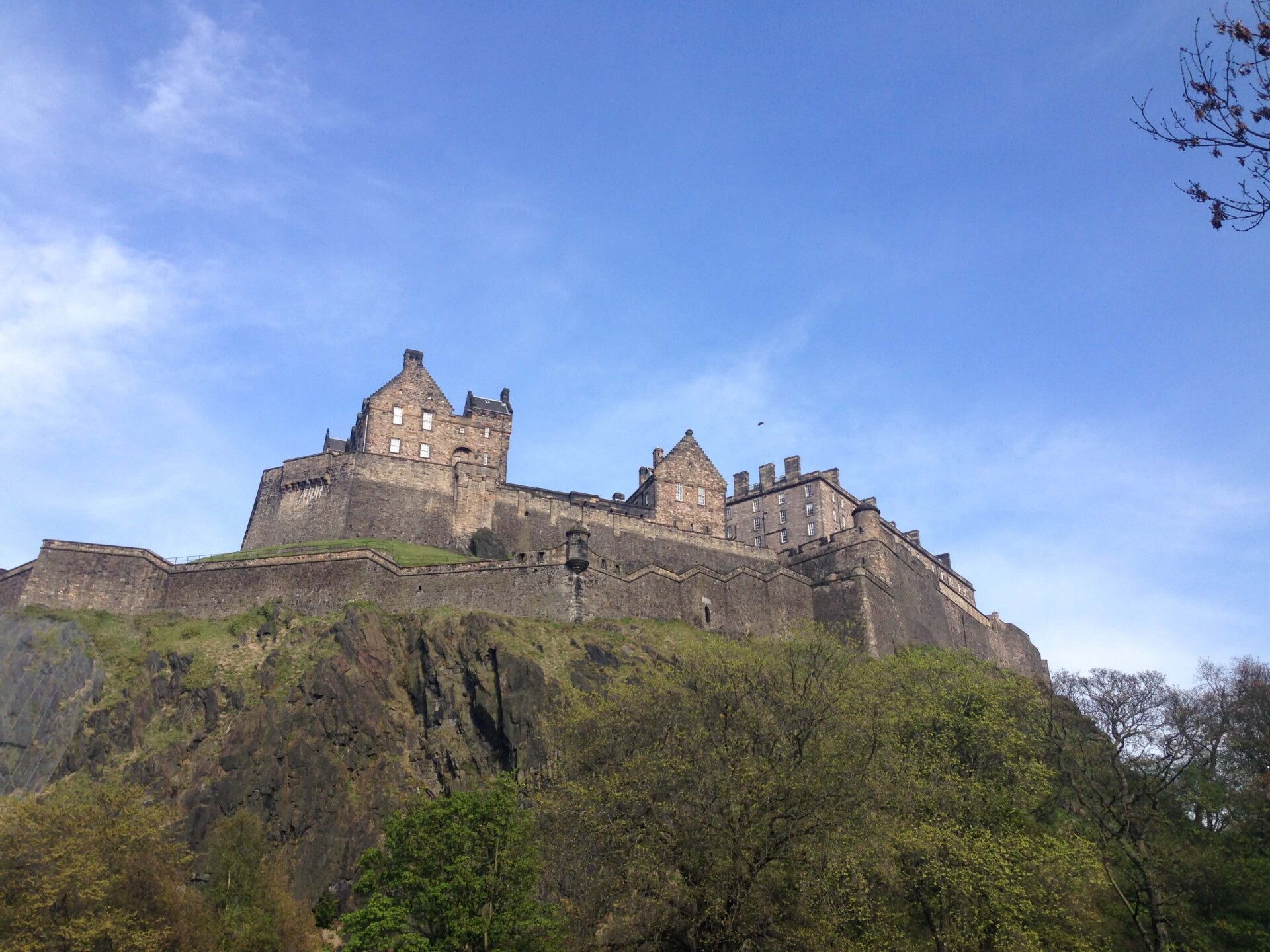
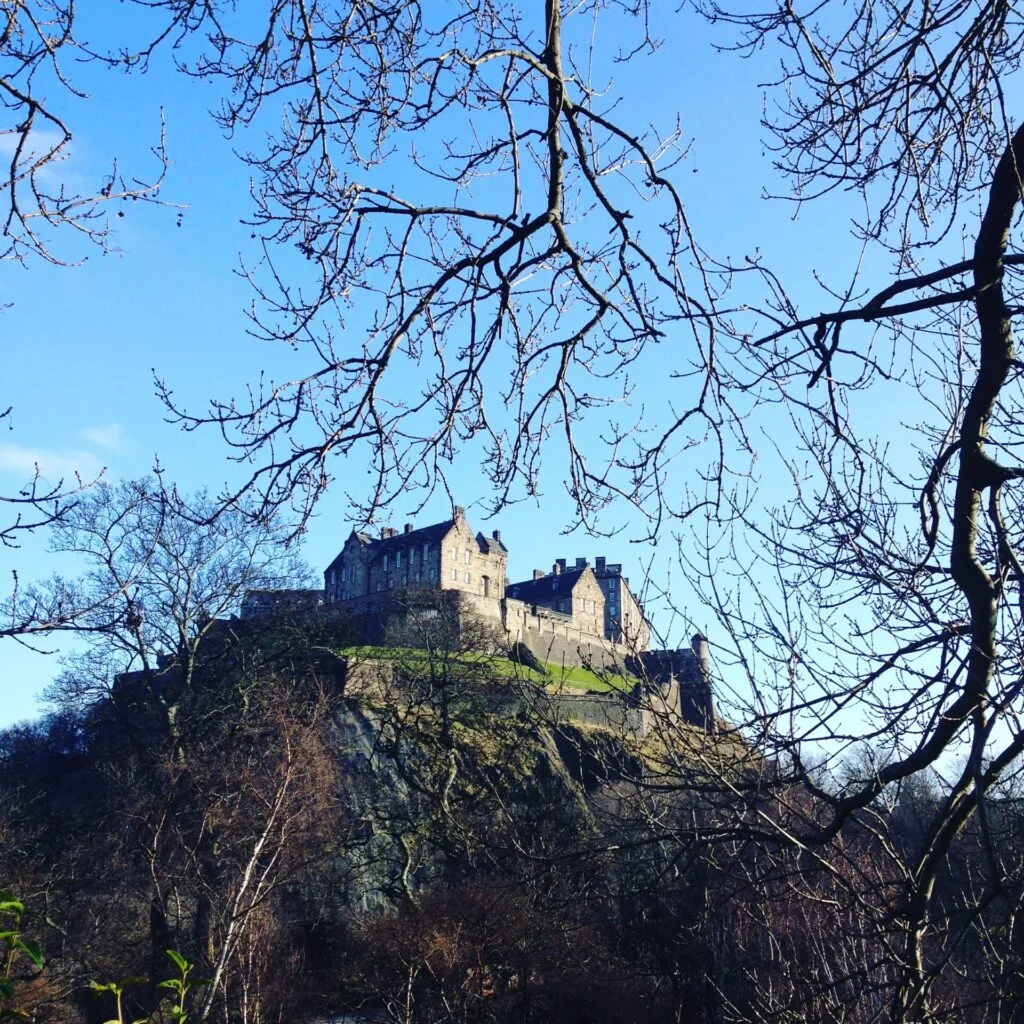
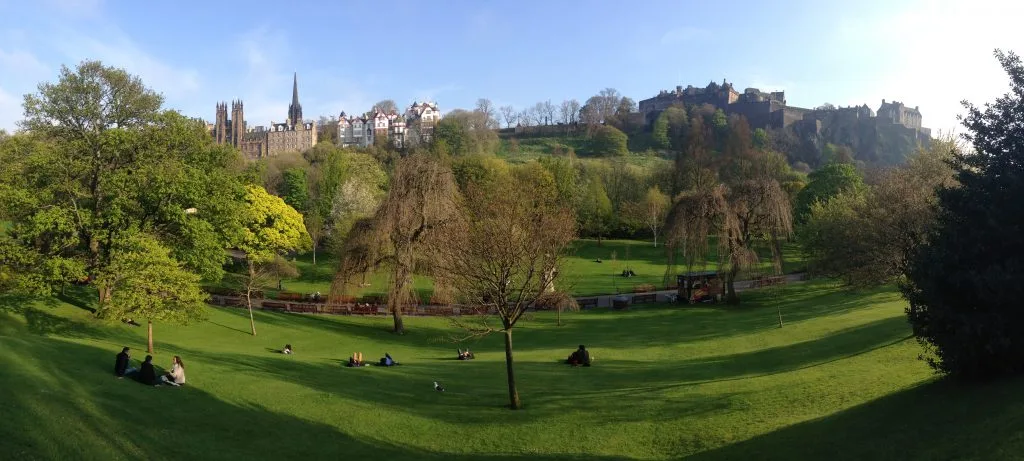
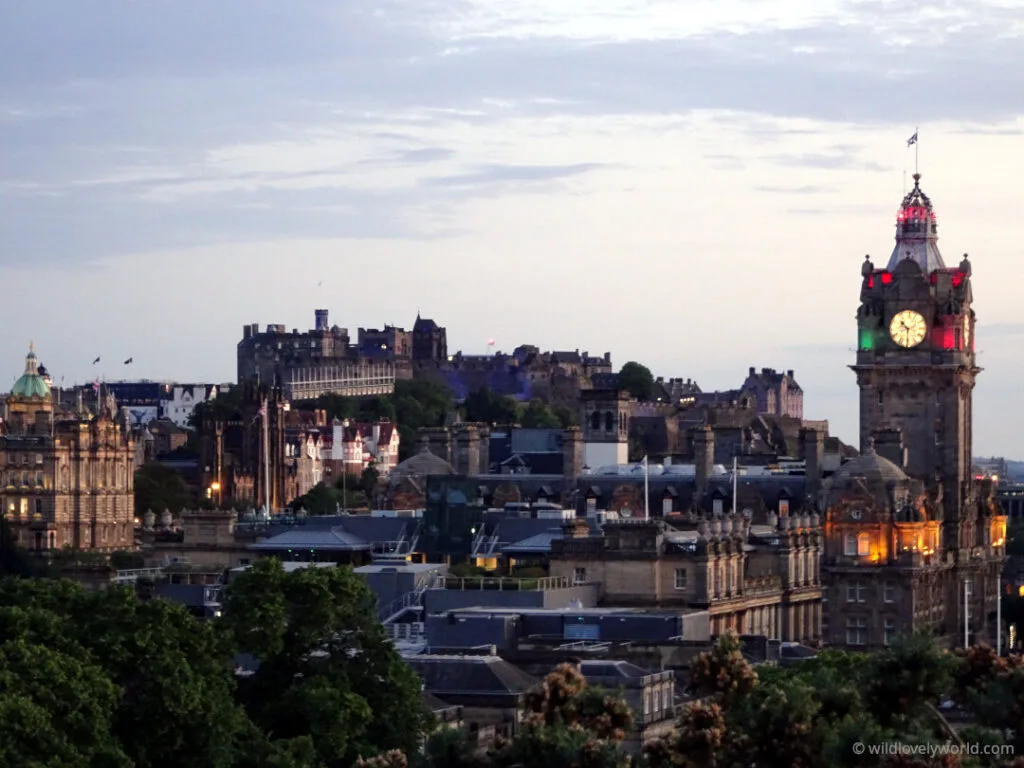
While living in Edinburgh, I always admired Castle Rock. It can be seen from all around the city, from Princes St to the West End, and from Castle Terrace to the Grassmarket. It is interesting to see the rock and the castle from different angles. I have taken countless photos of Castle Rock and Edinburgh Castle over the years. There’s something about it that I just find striking.
Castle Rock and Edinburgh Castle are great landmarks that have shaped the city in many ways into what it is today. In this post, we take a look at the history of Castle Rock and how it was formed, plus the history of Edinburgh Castle and how the castle is used today. I have also included where the best places are to view and take photos of this iconic Edinburgh landmark.
Quick Guide To The History Of Castle Rock & Edinburgh Castle, Interesting Facts & Best Photo Locations
Castle Rock is No. 5 in our Quick Guide to The Seven Hills of Edinburgh series. Check out the full series here: The Seven Hills Of Edinburgh: A Quick Guide
Quick History Of How Castle Rock Was Formed
Castle Rock is the plug of an extinct volcano. It is estimated to have formed around 350 million years ago.
The rock is made of a type of basalt (volcanic rock) which cooled and hardened. All the surrounding rock was sedimentary rock.
Since its formation, the surrounding sedimentary rock was eroded by a glacier moving from west to east. The volcanic plug protected the east side from erosion by the glacier, making a crag and tail formation.
The result is that Castle Rock is jagged, rough and dramatic on all sides except via the sloping tail. The rock therefore makes a strategic point because it cannot be easily ascended from any side other than the east side. The Royal Mile and Esplanade are built on top of the tail on the east side, and Edinburgh Castle is built on top of the crag.
10 Interesting Facts About Edinburgh Castle
- 🌋 Built on an extinct volcano. The castle is built on an extinct volcanic plug called Castle Rock that formed millions of years ago.
- 🏰 Most besieged in Britain. It has been attacked and placed under siege 26 times, making it the most besieged in Britain.
- ⛪ Houses the oldest building in Edinburgh. St Margaret’s Chapel was built in the early 12th century and still exists today!
- 👑 Home of the Honours of Scotland – Scotland’s Crown Jewels. The castle houses Scotland’s Crown Jewels, which are the oldest in Britain. They were locked away for over 100 years from 1707 to 1818.
- 🤴 Birthplace of a King. In 1566, Mary, Queen of Scots, gave birth to King James VI of Scotland and James I of England – the first King to unite the crowns.
- 🐘 An elephant once lived at the castle. In the 1830s, an elephant from Sri Lanka was housed at Edinburgh Castle as a mascot of the 78th Highlanders Regiment.
- 🔫 Mons Meg fired a blast so powerful it shattered windows across the city. The cannon was fired in 1558 in celebration of the wedding of Mary, Queen of Scots. The stone ball landed in what is now the Royal Botanic Garden.
- 🏙️ David’s Tower was the first skyscraper in Edinburgh. The medieval tower was built in the 14th century and was over 30m high. 200 years later, the tower was destroyed and then built over, hiding what was left of it. It wasn’t rediscovered until 1912.
- 🗺️ The Ordnance Survey originated at the castle. Military Surveyor William Roy worked at the military drawing office in 1747, and his work led to the national mapping organisation being established.
- 🎪 Edinburgh Castle hosts concerts, festivals and events every year. Each summer the esplanade is transformed into a venue for the Edinburgh Castle concerts, Royal Edinburgh Military Tattoo and is the centrepiece of Edinburgh Hogmanay’s (New Year) firework display. 🎆 Bonus fact: Scotland’s first recorded fireworks display took place at Edinburgh Castle in 1507 during a jousting tournament hosted by James IV.
Quick History Of Edinburgh Castle For Visitors
Castle Rock, being elevated and in the middle of the city centre, is not hard to miss. But more so because of the dominating Edinburgh Castle, which almost looks as if it has grown right out of the rock itself rather than being built on top.
There is obviously a LOT of history regarding Edinburgh Castle, so I will provide a quick run-through of the main events in the history of Edinburgh Castle and how they relate to what you can see if you visit Edinburgh Castle today.
First Fortifications On Castle Rock
The strategic advantage of the rock was seen by Iron Age Celtic people who built a hill fort on the rock.
In 600 AD, a medieval reference to the site of Eidyn is made in a Welsh poem called Y Gododdin.
Since then, the castle defences have continued to evolve over hundreds of years.
St Margaret’s Chapel
In 1130, King David I, son of Malcolm III, established Edinburgh as a seat of royal power.
He lived at Edinburgh Castle and built some of the buildings of Edinburgh Castle as we see it today.
Most notable is the St Margaret Chapel, which was dedicated to his mother, Queen Margaret. His mother was said to have performed many acts of charity and was canonised by the Pope in 1250.
The chapel still stands today, and it is the oldest building in Edinburgh! The ornate arches inside the chapel are original, while other features such as the stained glass windows are more recent.
The chapel is still used for weddings and christenings.
You can visit St Margaret’s Chapel with your visitor ticket to enter Edinburgh Castle.
David’s Tower & Half Moon Battery
King David II (1324-1371), Robert the Bruce’s son, started to reconstruct the castle after it was damaged during the Wars of Independence (1296-1357).
David’s Tower was the first tower built in Edinburgh and dominated the skyline at over 30m high. The tower was at the heart of the castle during medieval times.
In 1371, the tower was dedicated to King David II after he suddenly died aged 46 at Edinburgh Castle. The tower was completed by his successor Robert II.
The tower was mostly destroyed in the Lang Siege 200 years later in 1573. Within a few years, the ruins of the tower were sealed inside a new defensive structure called the Half-Moon Battery, which can still be seen today as it overlooks the Esplanade. At this time, the Portcullis Gate was also constructed to strengthen the castle’s defences.
However, in 1912 excavations rediscovered parts of David’s Tower. They found the lower area of the tower, basement vaults and passageways within the walls of the Half-Moon Battery. Evidence from the siege and Edinburgh Castle’s violent past was also uncovered, as they found cannonballs and fragments of explosive shells during the excavations.
Special tours of David’s Tower have been organised by Historic Scotland, but general access to the tower is closed to the public.
The Half-Moon Battery, however, can be viewed from the outside as it overlooks the main entrance to Edinburgh Castle. Or you can view it inside the walls of the castle on your visit. It is where many of the castle’s cannons are located, and you can get a great view of Edinburgh city and beyond from the vantage point.
James IV and I Birth Chamber (Royal Palace)
James IV was killed at the Battle of Flodden. After his death, the crown passed to his 5-year-old son, King James V. He died 25 years later, and the crown passed to his 1-week-old daughter, Mary Queen of Scots. Several English invasions followed.
In 1566, in a small room in the Palace at Edinburgh Castle, Mary Queen of Scots gave birth to her son James. He became King of Scotland (James VI) aged only 13-months, and in 1603, following Elizabeth I’s death, he became King of England (James I). He was also great-great-grandson of Henry VII, who was King of England and Lord of Ireland, making James a potential successor to all three thrones.
The small room where James was born is located in the palace block and is open for visitors of the castle today! The adjacent chamber called Laich Hall is decorated with coats of arms in honour of the King and can also be visited.
The Great Hall (Royal Palace)
The Great Hall was constructed by James IV in 1511. James IV (1488-1513) also arranged for the building of the first Gothic palace at the site of the Abbey of Holyrood, which would later become the Palace of Holyroodhouse.
The successor of James VI and I was King Charles I (1600-1649), and he visited Edinburgh Castle only once. On his visit, he hosted a feast in the Great Hall and stayed the night before his Scottish coronation in 1633. This is the last occasion that a reigning monarch resided in the castle.
King Charles I was executed during the English Civil War (1642-1651). Oliver Cromwell took power and seized Edinburgh Castle in 1650.
Cromwell converted the Great Hall into a barracks for his troops. The Great Hall remained as accommodation for soldiers and later used as a military hospital until 1886.
Today, the Great Hall has been restored to contemporary ideas of medieval architecture. On display are weapons and armour.
Visitors to Edinburgh Castle can see the Great Hall, located at the centre of the castle in Crown Square.
Barracks, Military Use & Prison
Edinburgh Castle was repeatedly besieged during the 17th and 18th centuries. The castle is the most besieged in Britain.
The castle housed prisoners of war between 1757 and 1814, and the prisons can be seen by visitors to the castle.
The use of the castle as a Royal residence diminished as, just a mile away, was Holyrood Palace, which became the official residence of the Royal family in Scotland. You can visit the Palace with an entrance ticket and also see the beautiful ruins of Holyrood Abbey.
Edinburgh Castle continued to be used for military purposes. New Barracks were built on site and completed in 1799. This was built to house 600 soldiers and replace the outdated accommodation in the Great Hall. The barracks now houses the Regimental Headquarters and is still in use by the British Military today.
The former drill hall constructed in 1900 is now the Regimental Museum, and can be visited with the Edinburgh Castle entry ticket.
Scottish National War Memorial & Museum
A National War Memorial was opened at the castle in 1927, and the National War Museum opened in 1933. They are open to visitors of the castle.
Mons Meg Cannon
In 1829, a giant cannon called Mons Meg was returned to Edinburgh Castle and can still be seen today. It sits outside St Margaret’s Chapel.
Mons Meg was made in Belgium and was given to James II as a gift from the Duke of Burgundy in the 1450s. It was used in several battles across Scotland for around 100 years.
After retiring, the cannon stayed at Edinburgh Castle for another 200 years and was fired on ceremonial occasions until it was taken to the Tower of London in 1754.
Many Edinburghers campaigned for its return, including Sir Walter Scott, and in 1829 Mons Meg was returned to the castle.
Edinburgh Castle Restoration & Crown Jewel Rediscovery
By the 19th century, Edinburgh Castle had fallen into disrepair and restoration schemes were proposed to restore the castle.
Scottish architect Hippolyte Blanc worked on the project and is credited with restoring the Arglye Tower, portcullis gate, and Great Hall to contemporary ideas of medieval design.
Sir Walter Scott stimulated interest in Scotland’s history and was influential in turning Edinburgh Castle into the tourist attraction it is today.
Since the Act of Union 1707 between England and Scotland, the Crown Jewels (Honours of Scotland) were locked in a chest and sealed away. In 1818, Sir Walter Scott received permission to open up the Crown Room where the Crown Jewels had lain without being disturbed for 111 years.
George IV visited Edinburgh Castle in 1822, which was orchestrated by Sir Walter Scott. It was the first visit of a reigning monarch to Scotland in nearly two centuries, the last being Charles II in 1651. A procession was held from Holyrood Palace to Edinburgh Castle.
These events inspired public interest in Edinburgh Castle and led to it becoming the landmark of Scotland’s capital that it is today.
UNESCO World Heritage Site & Edinburgh Castle Today
In 1995, Edinburgh Castle, along with the New and Old Towns of Edinburgh, became a UNESCO World Heritage Site.
Today, Edinburgh Castle is a major tourist attraction and welcomes approximately 2 million visitors every year. Historic Environment Scotland manages the castle’s tourist and commercial facilities, including the cafes, shops and historical displays.
If you visit the castle, you can see many of the buildings and relics mentioned above, as well as the military museums. A highlight is also seeing the crown jewels of Scotland – the Honours of Scotland.
I’ve visited Edinburgh Castle multiple times. Each time, I have seen and learned something different and gained a new appreciation for events that have shaped the castle to be what it is today.
The Castle Esplanade hosts the Royal Edinburgh Military Tattoo every August. I’ve been to this event and it was definitely an energetic and unique experience!
Every day except Sunday, at One O’Clock, the Gun is fired from Edinburgh Castle. This has been a tradition at the castle since 1861. You can hear the gun from most areas of Edinburgh city centre so don’t feel you need to travel to the castle especially to see it!
The Best Places To View & Take Pictures Of Edinburgh Castle & Castle Rock
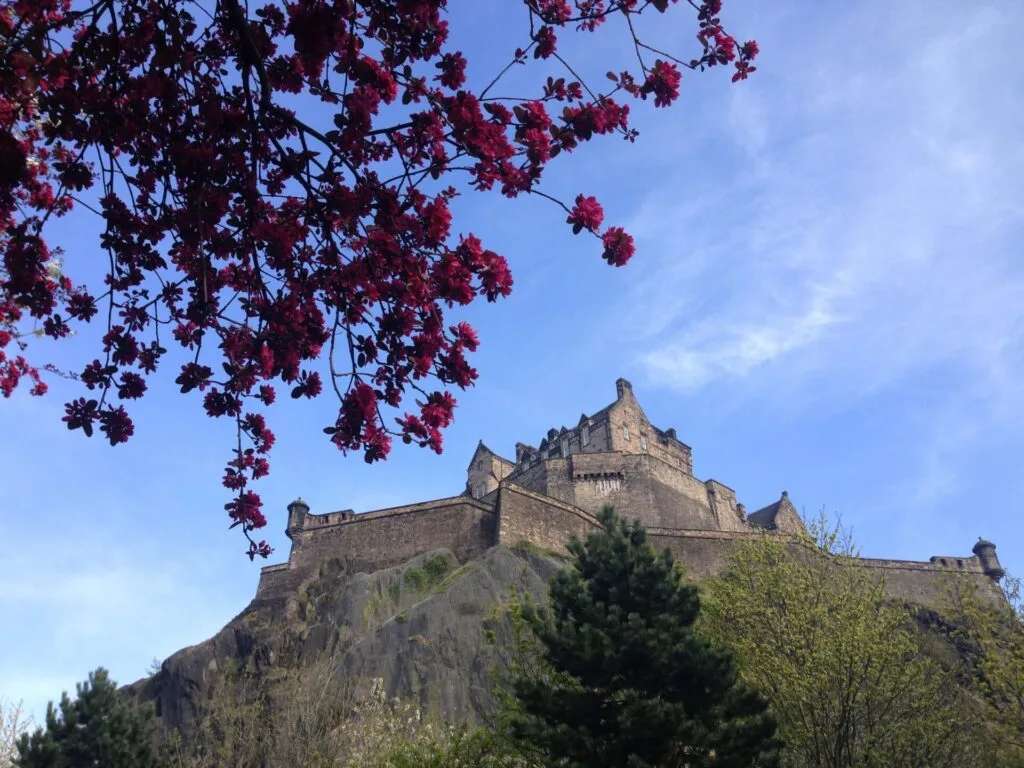
There are many locations around Edinburgh to view and take pictures of the castle and Castle Rock.
The most obvious are the paths around Castle Rock through Princes Street Gardens and around Johnston Terrace, at the south side of the castle. Johnston Terrace skirts and slopes around the edge of Castle Rock, offering excellent views of the Rock and Castle, and is the best location to see it close up.
For picturesque views of the castle, there are several staircases and hills around Edinburgh you can climb to get an even better view. The most popular spots are The Vennel near Grassmarket and Calton Hill. But if you’re willing to venture further afield you can have the opportunity for a lovely view of the castle without the crowds.
The best places to view and take pictures of Edinburgh Castle and Rock are from these locations:
- Princes Street
- Cafe on Princes St – Waterstones, Starbucks, Willow Tea Room, Black Sheep Coffee
- Top of the Scott Monument
- Princes Street Gardens (Ross Fountain)
- St Cuthbert’s Steps and Kirkyard
- King Stables Road
- Castle Terrace
- Johnston Terrace
- Esplanade and Castle Hill (Royal Mile)
- Grassmarket Square
- The Vennel (a staircase in Grassmarket)
- National Museum of Scotland roof terrace
- Calton Hill
- Arthur’s Seat and Salisbury Crags
- Corstophine Hill (Rest and Be Thankful viewpoint)
- Blackford Hill
- Inverleith Park
Every time I see Edinburgh Castle and Castle Rock, I am in awe of its majesty! Visiting these different locations will give you a varied perspective and are great spots to take photos.
Edinburgh Castle Tickets & Tours
Castle Rock & Edinburgh Castle: Quick History Guide For Visitors (& Best Photo Locations!) – Thanks For Reading!
Castle Rock is one of the Seven Hills of Edinburgh and home to Edinburgh Castle, one of Scotland’s most popular tourist attractions.
From starting life as a volcano to housing the most besieged castle in Britain, the history of Castle Rock and Edinburgh Castle is long and filled with interesting facts.
The events of the Castle over time have shaped Edinburgh to be what it is today, and the landmark continues to fascinate and inspire millions of people who visit it every year. – Lauren x
Castle Rock is No. 5 in our Quick Guide to The Seven Hills of Edinburgh series. Check out the full series here: The Seven Hills Of Edinburgh: A Quick Guide

Did you find this article useful? Let me know in the comments or join me everywhere @wildlovelyworld
If you enjoyed this post, share it with a friend! 💌
Say thanks and send me a virtual coffee on Ko-Fi!☕

Looking for more awesome stuff to do in Edinburgh? Check out these posts:
- Best Coffee Shops & Cafes In Edinburgh Old Town (Local’s Guide & Map!)
- Autumn In Edinburgh: Best Places To See Colourful Leaves
- Edinburgh Christmas Markets & Fairs: What’s On
- Calton Hill Complete Guide: Easy Walk & Famous View Of Edinburgh
- Corstorphine Hill Edinburgh (Hidden Gem!): 5 Reasons To Visit & Best Things To See
- Craiglockhart Hills – Quick Guide To A Short Walk In Edinburgh
- Castle Rock & Edinburgh Castle: Quick History Guide For Visitors (& Best Photo Locations!)
- Braid Hills Walk Edinburgh – Your Complete Guide
- Blackford Hill & The Hermitage Of Braid Walk Edinburgh – Complete Guide
- Arthur’s Seat Edinburgh Walk: Quick Guide To Best Route (& Map!)
Related Articles

Edinburgh Christmas Markets & Fairs: What’s On
Calton Hill Complete Guide: Easy Walk & Famous View Of Edinburgh