
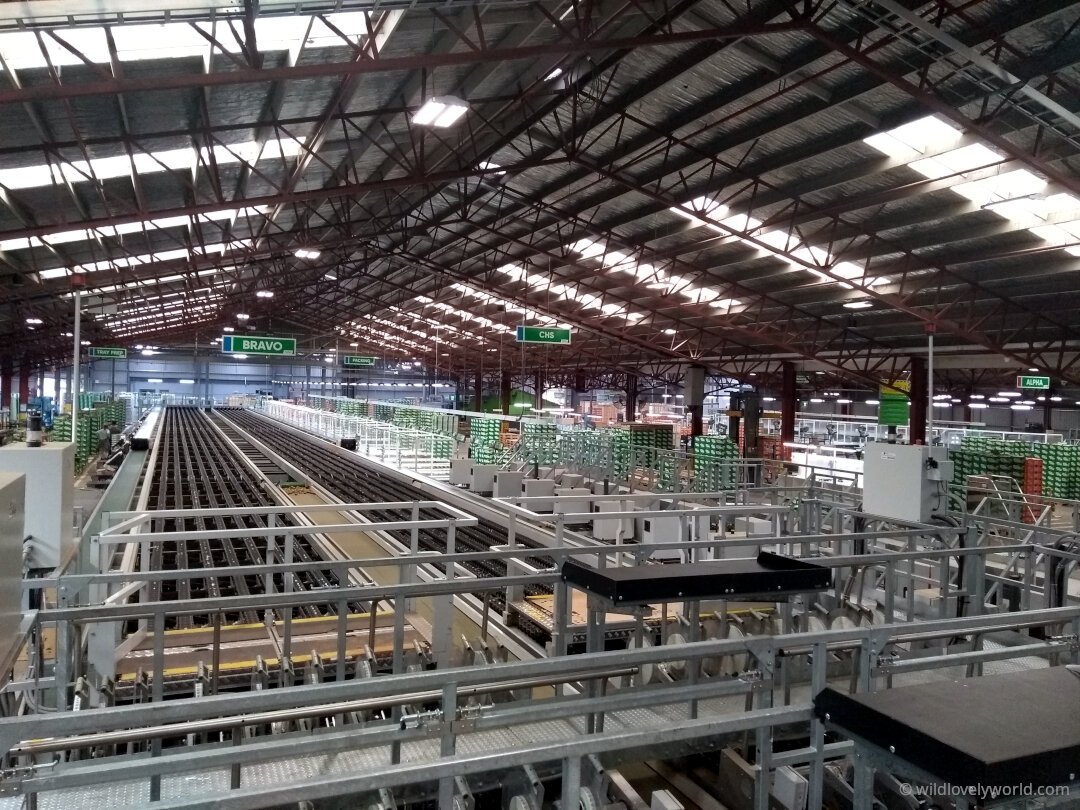
Kiwifruit Packhouse Jobs NZ: What Is It Like? My HONEST Experience!
Updated: 19th September 2026
Home » Blog » Oceania » New Zealand » North Island » Bay Of Plenty »Are you thinking of getting a job in a kiwifruit packhouse in New Zealand? My husband and I both worked in a kiwifruit packhouse for one season in Te Puke, Bay of Plenty – the Kiwifruit Capital of the World!
Neither of us had ever worked in the fruit packing or food processing industry before, so we had no idea what to expect. Previously, we had both done predominantly office jobs or hospitality/events work. The idea of working in a noisy factory for minimum wage did not appeal to either of us, but needs must!
When we moved to New Zealand on Working Holiday Visas, we arrived with only about $3500 NZD between us – we had to earn money fast! To make matters worse, we arrived just before the first Covid-19 lockdown, so getting a job when we landed was impossible. However, after a few weeks, restrictions eased for jobs in “essential industries”, and food processing falls into that category!
During the lockdown, we were staying in the Bay of Plenty to “bubble” with my cousin. My cousin knew all about the kiwifruit industry, as the Bay of Plenty is a major growth area for the fruit in New Zealand. She suggested the names of a few packhouses to contact for employment, and within a matter of days we had a job at the packhouse!
The packhouse was certainly not the best job we have ever had, but it was not the worst experience either. I thought we were going to hate it, but it actually wasn’t that bad. We ended up relocating in our campervan to Te Puke, staying in a campsite just near the packhouse, and staying there for the whole season!
In this post, I share my honest experience of what it is really like to work in a kiwifruit packhouse in New Zealand. This post covers the types of jobs in a packhouse, the hiring process, working hours and pay rates, applying with a Working Holiday Visa, accommodation options, and general working conditions in a kiwifruit packhouse!
Kiwifruit Packhouse Jobs New Zealand: Everything You Need To Know 🥝
Read my New Zealand Travel Guide for all my blog posts and tips for travel in New Zealand!
Related Read: 12 Best Paid Backpacker Jobs In New Zealand
Zespri Kiwifruit
Most of New Zealand’s exported kiwifruit is under the brand ‘Zespri’.
The main kiwifruit is the green one and makes up the majority of New Zealand’s crop. This variety is ‘public domain’ but most commercial growers contract with Zespri for export of this fruit too.
Zespri have a patent on the gold variety of kiwifruit, Sungold. I had never heard of this type before coming to New Zealand, and it is actually really good! This kiwifruit is less hairy than the green one, and the taste is sweeter.
Zespri have also developed a red kiwifruit called Ruby Red. Unfortunately, I never got to try one of the red kiwifruits because they are rare and expensive. Our packhouse did not pack these.
Kiwifruit Season In New Zealand
In New Zealand, kiwifruit growing and picking seasons are as follows:
- June – August: Vine pruning
- September – November: Vines growing and flowers pollinated
- December – February: Berries growing, vine pruning and thinning
- March – May: Kiwifruit picking and packing
Kiwifruit picking and packhouse work begins in March and runs through until mid-June, depending on workload.
Packhouse employers begin advertising in January for the upcoming season and continue to recruit all the way through to June. This is because sometimes workers do not stay for the whole season, so they need to keep hiring.
Picking work tends to dry up in May as all the kiwifruit is picked, but the packhouse work tends to continue until June because of the backlog.
Kiwifruit Packhouse Employers & Locations
Kiwifruit is mostly grown in the Bay of Plenty, so this is where most of the packhouses are located (around 80% of New Zealand’s total production). Other locations in the North Island for kiwifruit jobs include Northland, Coromandel and East Cape, but if you want to work for the season, your best bet is to head to the Bay of Plenty.
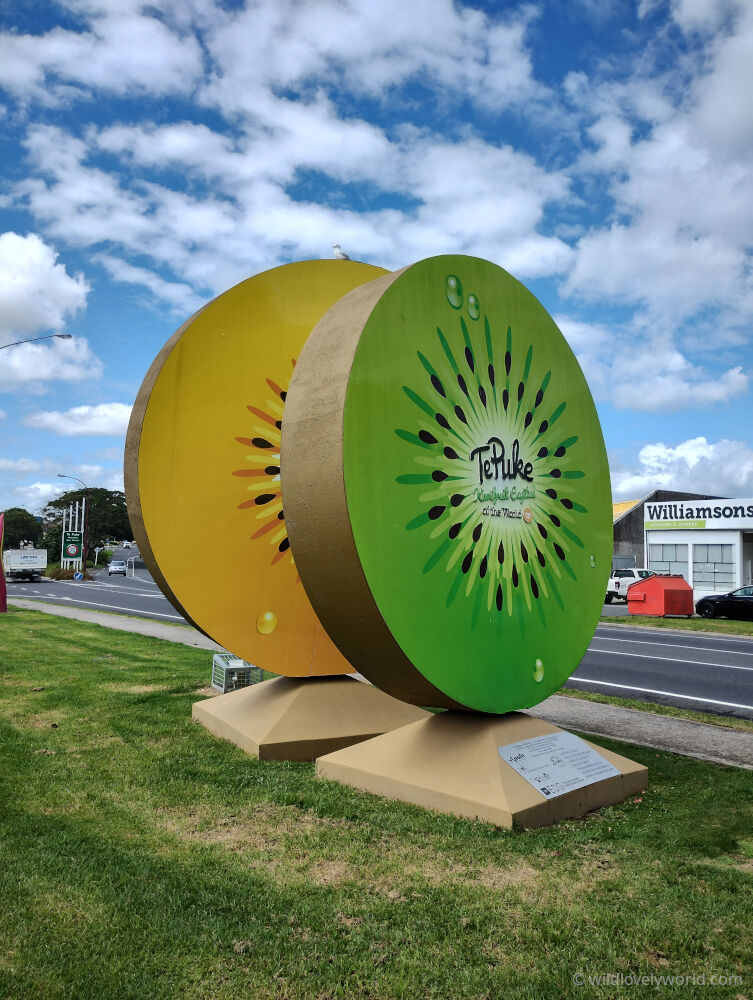
Te Puke is the main kiwifruit town. It is home to a giant kiwifruit and is known as the Kiwifruit Capital Of The World!
The major kiwifruit packhouse employers are Seeka, EastPack and Trevelyan, and all these employers have sites in Te Puke. They all pack Zespri kiwifruit – mostly the green and gold varieties.
- EastPack also employs teams in Katikati, Edgecumbe and Opotiki (all towns in Bay of Plenty).
- Trevelyan only has one packhouse, located in Te Puke. They also pack avocados.
- Seeka has several locations across the North Island, so they are an employer to check out if you want to work in a region other than the Bay of Plenty.
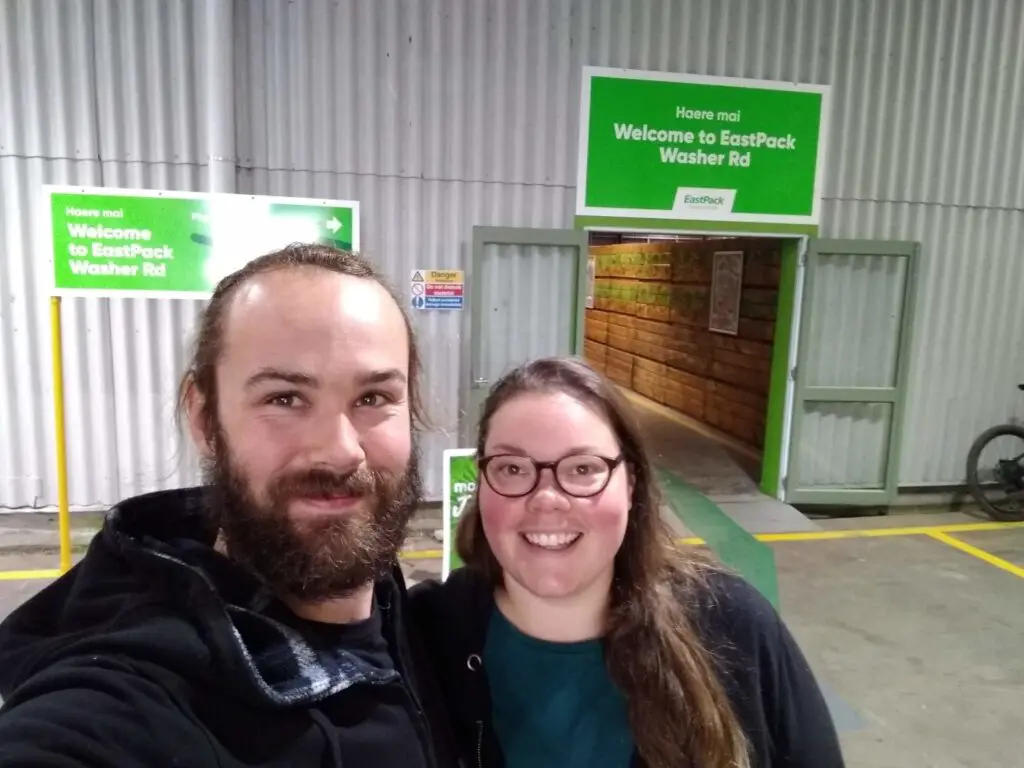
Te Puke is the town that we worked in for our kiwifruit work season, and we were employed at EastPack at the Washer Road site.

Applications, Hiring & Induction
It’s very easy to get hired in the kiwifruit industry. No prior experience is necessary, and the industry employs thousands of workers every season. EastPack alone has over 3,000 jobs available.
Kiwifruit season starts in March and runs for 12-24 weeks. Most roles will finish in June; however, there could be an option to stay on longer depending on workload.
To get a job, just fill out a short application form online via the packhouse website (Seeka, EastPack and Trevelyan). Then a member of HR will call or email you to arrange for you to come in for an induction.
The induction goes over the general working environment of the packhouse, break times, health and safety, uniform, pay rate etc.
For many roles, they don’t even do an interview.
The process can be pretty quick, and you can begin working on the next shift as soon as you have completed your induction.
It only took us a week or so to go from application form to starting work.
Option To Select A Preferred Job Type When You Apply
When applying for a job in the kiwifruit packhouse, it is possible to list what type of job you would like.
As I didn’t know anything about these positions, I put ‘Any Available’. It is fine to do this too, as it keeps your options open, and once you are employed by the packhouse, it is possible to move around if you think another position is better suited to you.
It is quite common to be moved around the kiwifruit packhouse and have to do different types of jobs from your usual one anyway in order to meet the needs of production. You could end up doing many different types of jobs in the kiwifruit packhouse, which can be good for you to have a break from the repetitive role you are assigned to daily and to also learn about different aspects of production.
Below I describe the different types of jobs in the kiwifruit packhouse. I’ve learned this from working in a packhouse myself, but before doing so I had no idea! Sharing this knowledge will be helpful to you, to give you an idea of what all the possible roles are. If there’s any of these roles that you think you would prefer, you could put them on your application form.
Types Of Jobs In A Kiwifruit Packhouse
There are many different types of jobs available in the kiwifruit packhouse.
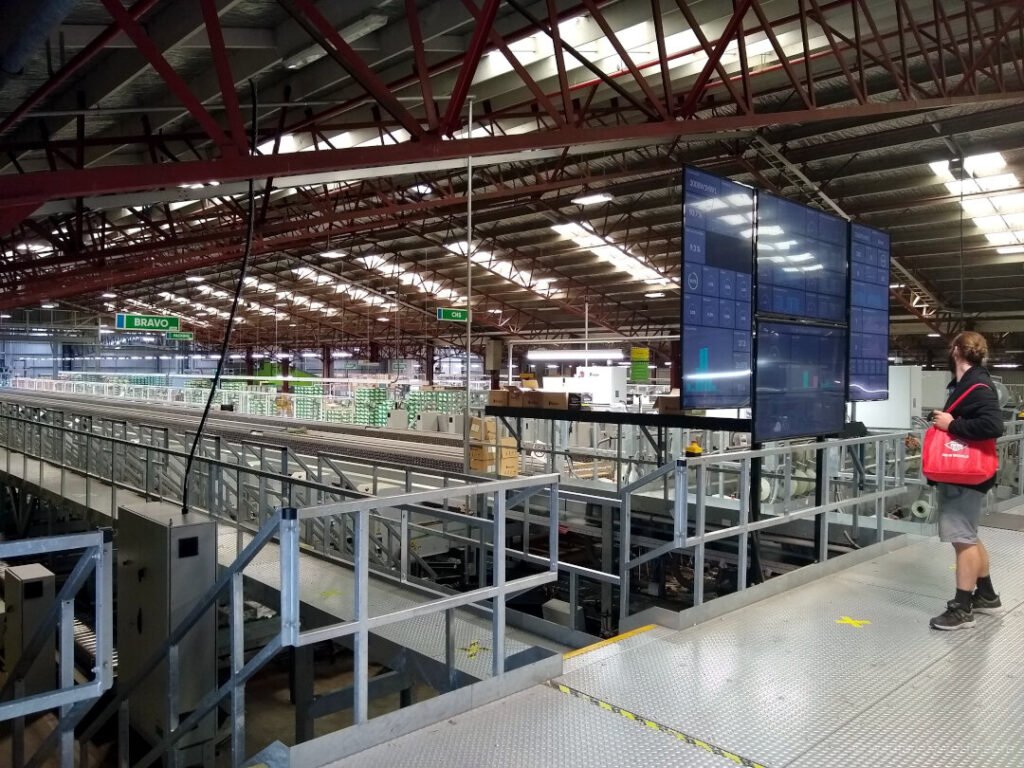
During my time working in the kiwifruit packhouse, I did Tray Prep, Packing, Repacking, CHS, Grading and Soft Sorting. My husband, Fiachra, worked as a Stacker. And this is not all the jobs available!
I have listed below as many kiwifruit packhouse jobs as I know about, with a brief description for each role.
Packaging & Assembly Roles
Box Making: Assemble the cardboard boxes/trays that the kiwifruit go into. Usually this is done by feeding blank pieces of cardboard into a printing machine which colours, glues, and folds the boxes automatically. There are usually 2 people working in box making. Working as a team, one person is putting the cardboard into the machine, and another person is taking the finished boxes out and putting them onto a pallet. Lifting the finished boxes is physically demanding work, and the box-making machine is also very noisy. In the packhouse we worked at, the Box Makers were also paid an incentive pay on top of the hourly minimum wage. The extra depended on how many boxes they made and the packhouse they worked for. I have heard of some box makers earning up to $35 per hour! If you’re wondering why the pay is incentive-based, I honestly have no idea, because none of the other jobs in the kiwifruit packhouse is. I guess they just want to encourage box makers to make as many as they can, as fast as possible!
Tray Prep: Fit the cardboard boxes/trays with plastic liners or other protective material for the fruit to be packed in. Other jobs in Tray Prep include people moving pallets of boxes from Box Making to the Tray Prep area and restocking plastic bags, sheets and trays.
Packhouse Line Roles
Bin Tip: Operates the machine to tip and empty large wooden bins of kiwifruit (coming straight from the orchard) onto the sorting line.
Soft Sorting: The first step in the packhouse line – inspecting the kiwifruit as it enters the packhouse line from bin tip, to detect and remove soft or overripe kiwifruit, bugs, leaves and branches. If there is a squished kiwifruit, it needs to be removed and the conveyor belt cleaned before the next bin tip.
Grading: Manually inspect the kiwifruit and sort the kiwifruit based on specific criteria of perfection. Remove defective, blemished or misshapen fruit before it gets packed.
Packing: Pack kiwifruit into the boxes/trays, according to a specific count and visual standard.
Repacking: Inspect previously packed kiwifruit and replace the damaged ones or out-of-spec items to ensure compliance.
Stickering: Apply labels/stickers onto packed boxes. This is usually not a role in itself but a task done by the stackers, 2IC or team leaders.
Stacker: Lift finished, packed boxes of kiwifruit from the end of the line and stack them systematically onto wooden pallets.
Strapping: Strapping completed boxes together or bundling finished pallets securely for safe transit
CHS (Carton Handling System): Operate and monitor the automatic packing machinery.
Class 2: Class 2 is a mini packhouse inside the main facility to process Class 2 grade fruit – that is fruit that is for the local market because it doesn’t meet strict export criteria.
Specialist Roles
Quality Control: Conduct regular audits of packed fruit, testing for weight accuracy, skin blemishes and overall grade compliance.
Forklift Driver: Manually shift large wooden fruit bins and loaded pallets between cool stores, packing lines and dispatch bays. A forklift license is required for this role, and drivers have to pass a drug test.
Leadership Roles
Team Leader: Oversee the packhouse production line, safety, and staff coordination for a specific section or shift in the packhouse. Pay rate for these roles is usually only $1 more per hour.
2IC (2nd In Charge / Assistant Team Leader): Support the Team Leader with day-to-day operations, step in during breaks/absences, and help keep the line running smoothly.
Line Manager: Manage overall packhouse operations, line efficiency, targets, cross-departmental communication, and shift staffing.
Gender Bias In Kiwifruit Packhouse Roles
Unfortunately, we observed a gender bias within the kiwifruit packhouses. There are certain roles that the employers deem to be for men only or for women only.
For example, men were usually given the roles of Stackers and Strappers, and women were assigned to roles like Packing and Grading.
In the packhouse we worked at, all of the Stackers were men and all of the Graders were women.
Obviously, I hate employers discriminating based on gender, but it is a common occurrence in New Zealand, and we did experience it in many of our jobs in the country – the kiwifruit industry is no exception. I feel it is important to mention this so it isn’t a surprise if you end up working in a packhouse you may experience this kind of discrimination.
The Finished Product – Types Of Packed Boxes Of Kiwifruit 📦
As an example of the finished product that is made in the kiwifruit packhouse, I will explain the different types of boxes for gold kiwifruit:
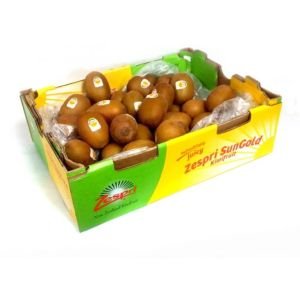
Gold Kiwifruit ML Boxes
These boxes are tall and wide and can fit up to 100 kiwifruit, depending on the size of the fruit! They are prepared by inserting a plastic bag into which all of the fruit drop. ML boxes are usually used in the automatic packing machine Carton Handling System as well as packing by hand. They are one of the easiest boxes to prepare because they do not need a plastic tray.
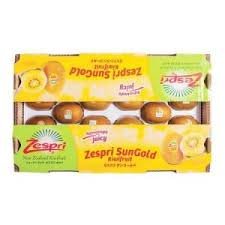
Gold Kiwifruit IT Boxes
These are slim and long boxes which fit one size of kiwifruit to a maximum number depending on the size of the tray inserted. For example, they may hold 25, 33 or 36 kiwifruit. Usually (but not always) the number of kiwifruit in the box is also the ‘size’, which runs from a size 16 (largest fruit) up to, I believe, a size 44 (smallest fruit). So in the size 22 box, there are 22 kiwifruits. IT Boxes are prepared by pulling a plastic sheet from a large roll and laying a plastic tray over the top of it. Because of the size of fruit they hold (smaller fruit), they are the most popular box with the most drop lines in production. This means that the tray prep (and the packing) lines run fast.
Gold Kiwifruit IJ Boxes
Similar to the IT Box, and prepared the same way, but for Jumbo size kiwifruit – sizes 16 and 18 (larger sizes). As there aren’t as many large kiwifruits compared to smaller sizes, these lines run slower. For example, there may only be a few boxes of size 16 produced per day. This means that usually there isn’t anyone assigned to these lines, but they may have to cover them in addition to an IT or an ML line.
Working In A Packhouse On A Working Holiday Visa
Working in a kiwifruit packhouse is a really popular job for Working Holiday Makers in New Zealand. It is a seasonal role that lasts for around 4-months. It is a job that New Zealand locals do not really want to do, so the roles need to be filled by those willing to work.
When we were working in the kiwifruit packhouse, we met many other people on Working Holiday Visas. They were from all over the world, predominantly South American, Asian and European countries. We were also working with a lot of people from the Pacific Islands, as they tend to come to New Zealand on Seasonal Employment visas specifically to fill roles in places such as packhouses.
We had a great time working with our teammates and getting to know them during breaks and on-shift (if possible; it was not always possible to chat during work due to the nature of the role! But in Soft Sorting we were always able to have a chat! In tray prep and packing, not so much).
Kiwifruit packhouse employers tend to hire those on Working Holiday Visas and Seasonal Employment Visas. They need a lot of workers for a concentrated period of time, and those on work visas can fill the gap.
If you’re on a Working Holiday Visa and looking to earn money quickly and can tolerate doing boring, manual labour for a few months, then packhouse work is a good option to build your travel funds. You’ll also meet lots of nice people at the packhouse, and the employers tend to offer incentives, such as free meals and prizes, during shifts.
- Related Read: 3 Types Of Work Visas For Backpackers In New Zealand
Types Of Packhouse Roles For WHV
The types of jobs Working Holiday Visa holders usually get in the packhouse are in packaging and assembly roles and packhouse line roles. These are jobs like Stacker, Packer, Grader, Soft Sorter, and Tray Prep.
If you have a forklift licence, you could get a Forklift driver role.
The specialist Quality Control and leadership roles tend to be given to permanent residents/New Zealand citizens, but that is not always the case.
There were some visa holders as 2IC or Team Leaders at the packhouse we worked at, and it tended to be their second season, so they already had experience.
In fact, Fiachra was offered a Stacker Team Leader role for the next kiwifruit season directly by the Line Manager (it seemed he was headhunting for his team!), but Fiachra turned it down as we already had a job elsewhere!
Working Hours & Shifts In The Kiwifruit Packhouse
Most packhouses operate a day shift and a night shift. Night shift workers will get paid more (a couple of dollars more per hour), but of course you will have to stay up working the whole night.
We worked on the day shift because I can’t be dealing with night shifts. Our day shift was usually 10 hours, from 7:30 am to 5:30 pm. And the night shift would usually take over from 6:30 pm to 4:30 am. The packhouse runs almost 24 hours a day, processing all the kiwifruit that has been picked.
The kiwifruit comes straight from the orchard to the packhouse. That meant there was usually a constant flow of fruit coming into the packhouse line. Therefore, the line never stopped from when it started at the beginning of the shift to when they briefly shut it down for shift changeover. The line may also stop if there is an issue. This happened sometimes, but it was never for very long!
Shift Schedule & Days Off
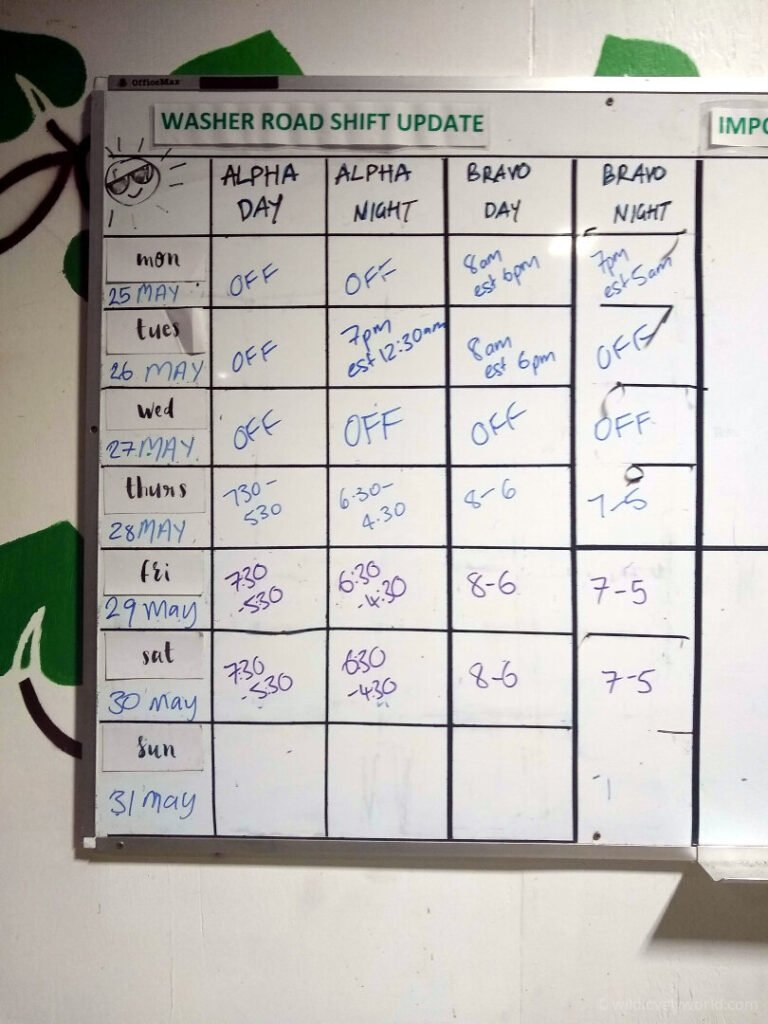
The work continued daily when the picking was good, meaning that the packhouse workers would not get a day off. Once we worked 21 days straight without a day off. By this point, we were all doing rain dances because we were desperate for a day off!
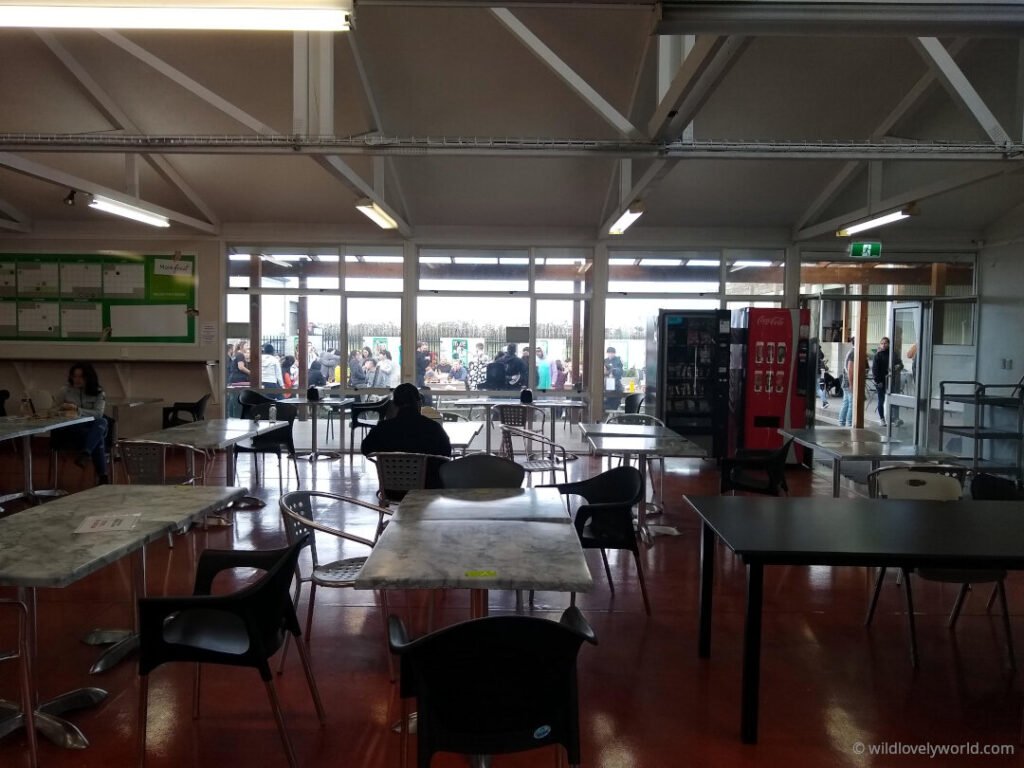
Each morning we received a text message from the packhouse letting us know our shift times. We had to make sure to check each morning so we knew what shift was that was happening that day. This system was a little bit annoying because it meant you couldn’t guarantee if you were working the next day or not. Sometimes they would update a whiteboard with a schedule in the cafeteria area, but we still had to check our phones every morning.
The hours were never guaranteed as it depended on need. Sometimes we would work shorter hours, but we never worked longer than 12-hour shifts in one day.
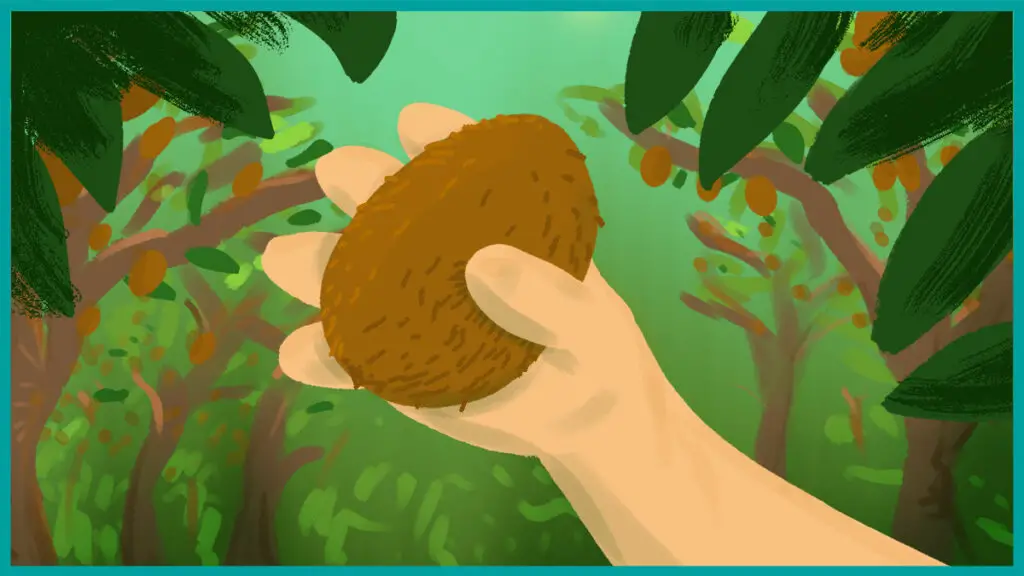
Kiwifruit Picking Stops When It Rains! ☔
Kiwifruit, for some reason, cannot be picked when it is raining.
If it had been raining, it meant that no kiwifruit was picked, so no packing was needed, and we had no shift for that day.
Therefore, rain was both a good and a bad thing!
We tended to be informed the night before or the morning of the shift! That meant we had to be up before 5 am to check our phones for any messages on whether the shift was going ahead or not.
We knew that usually if it had been raining then there would not be a shift, but sometimes we still had to work in the packhouse because there may have been a backlog. Occasionally, that also meant that we could go home early if all the packing had been completed and there was no more fruit coming in.
“Smoko” & Breaks
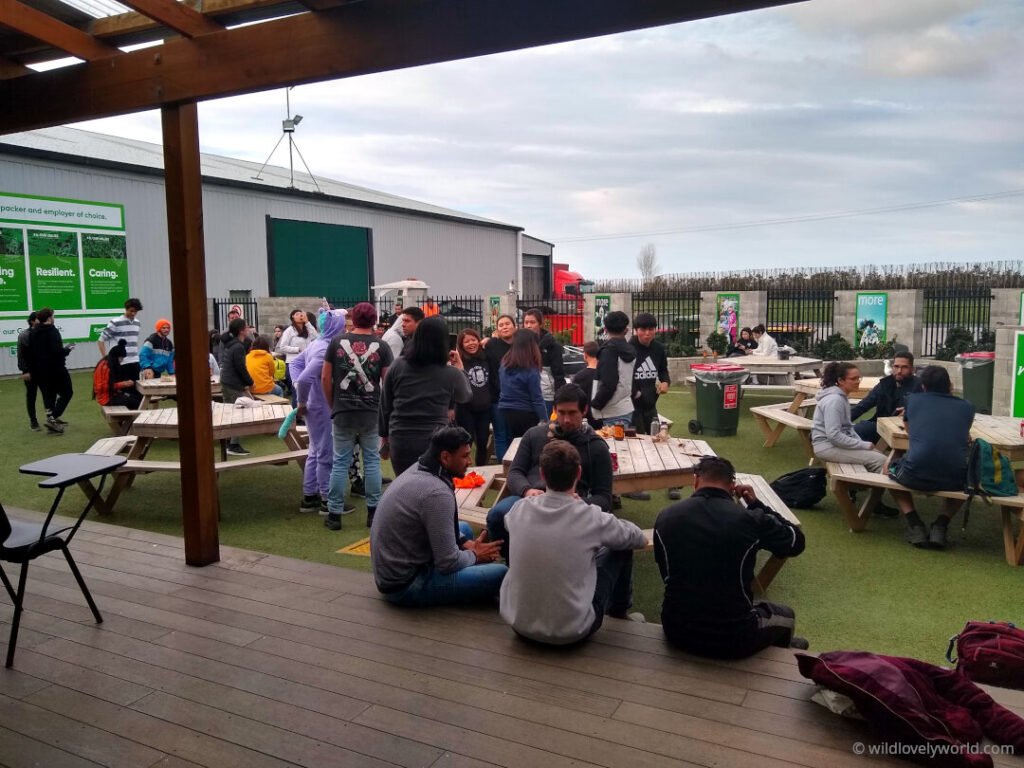
We had regular breaks throughout the shift: a 15-minute paid break in the morning, a 30-minute unpaid break for lunch, and then a 15-minute paid afternoon break. The breaks met the minimum standard for New Zealand Employment Law.
They call all the breaks “smoko” in New Zealand, even if they’re not smoking breaks specifically – just every break is called “smoko”.
This is even the official term on the announcements in the packhouse.
When it was break time, the horn would sound, and the machines would shut down, and a message came from the speakers announcing “smoko”. I thought this was so funny!
We could spend our breaks in the indoor cafeteria, or the external break area, which had picnic tables and chairs on a lawn.
We always took a packed lunch, but sometimes the packhouse would provide a free lunch, like pizzas or pies.
If we ever needed the toilet during shift, you needed to let the 2IC or Team Leader know, so that someone could cover your position while you went to the toilet!
Pay Rates For Kiwifruit Packhouse Roles
Pay rates for most roles at the kiwifruit packhouse are minimum wage. That is approximately $23.95 per hour.
Some roles will offer more money. If you have a forklift licence, you can get additional pay, typically from $26 per hour.
A Team Leader on the line tends to get only $1 per hour more than minimum wage, so around $25 per hour. For the responsibilities, it doesn’t seem worth it.
In the packhouse we worked at, the Box Makers got paid an incentive per box they made. I don’t know how much it was or if that was unusual in the industry.
At the time we worked at the packhouse, we were earning $19.50 per hour. We were working around 9-10 hours of paid time per day. Depending on the workload, we were working 5-7 days per week. So that’s 45-70 hrs of work per week. Before tax, we were earning on average around $1,000 per week each while working at the packhouse. As a couple, that’s $2,000 NZD per week, which is pretty nice for a backpacker living for free in a campervan, haha.
How Much Could You Earn Working The Kiwifruit Season In New Zealand? 🤑
Working in a packhouse for the whole kiwifruit season, you could potentially earn around $15,500 NZD. That’s based on an estimated earning $23.95 for 54 hours per week (9 hrs per day for 6 days), for 12 weeks.
However, working hours are never guaranteed. You could earn more or less, depending on circumstances.
If you’re willing to put in the effort, show up for shifts and do the daily grind, working in a kiwifruit packhouse is a great way to build your travel fund so you can continue having amazing adventures in New Zealand!
My HONEST Experience Working In A Kiwifruit Packhouse
As I experienced different roles in the packhouse, I can give an idea of what it is like in several of the jobs at the packhouse so you have an idea. The roles I go into more depth are: soft sorting, tray prep, packing, repacking, grading.
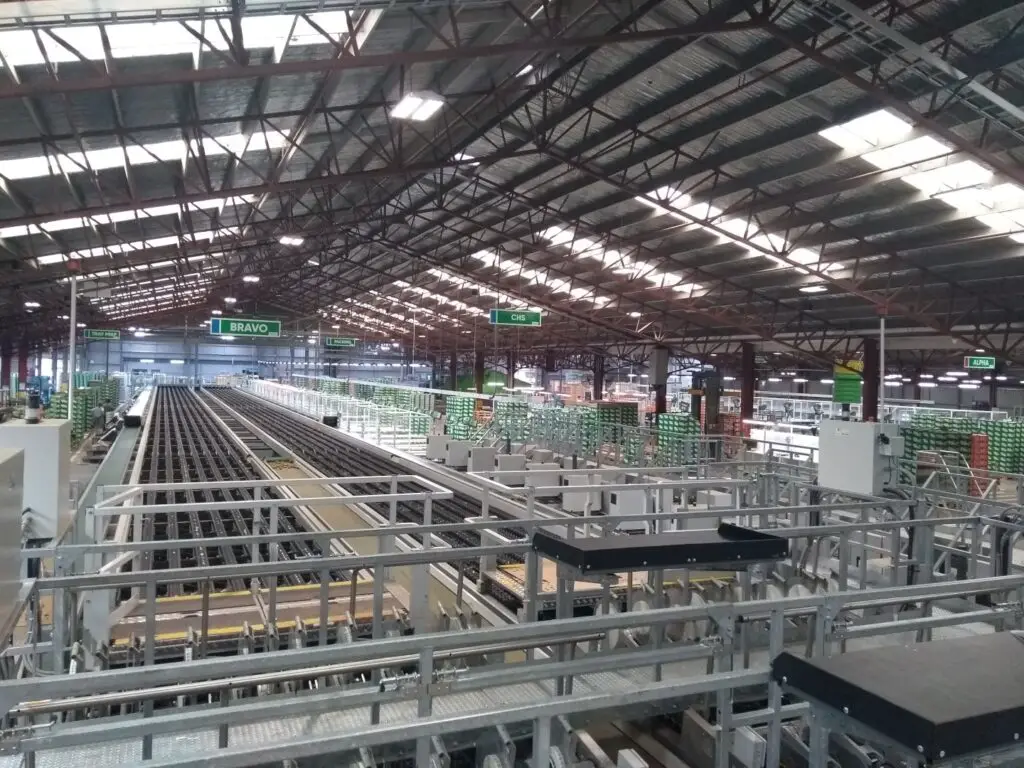
Working in several roles across the packhouse gave me a well-rounded view of the production line as a whole and how each role feeds into the next. I worked at almost every step of the process, all the way from the first role to the end role on the production line.
I enjoyed many of the jobs I did in the packhouse. Here is my overall view of the roles from my favourite to least favourite and why:
- My favourite job was Soft Sorting because I think it was the easiest and least boring because there were short breaks between tasks and I could chat with my co-workers.
- I also really liked Repacking because it was off the production line, so it was more relaxed; I was working in a small team, and we could go at our own pace.
- My least favourite job was Tray Prep because I think it was the most difficult (and it gave me carpal tunnel syndrome!). Tray prep was very lonely too because I didn’t have time to talk to any of my coworkers because it was so fast-paced.
- The most boring role, in my opinion, has to be Grading, because the job is to stare at kiwifruit moving along conveyor belts and checking them to make sure they meet certain criteria. There’s no chance to talk to anyone, as Graders are alone in their own section along the line.
What Is It Like Working In Tray Prep
Tray Preppers take the boxes that the Box Makers have made and prepare them to be filled with kiwifruit. This is done by inserting a plastic bag or sheet and a plastic tray, depending on the type of box.
The prepared boxes are then put onto a conveyor belt that goes through an automatic packing machine or through to a human Packer on the other side of the line.
My Experience In Tray Prep
In my opinion, Tray Prep is one of the most difficult jobs in the packhouse (and I have tried many different roles in the packhouse!). Tray Prep requires high-speed accuracy and efficiency. If the line is moving fast, you may have to prepare a box in just 5 seconds!
My journey in the packhouse began in Tray Prep, and although I enjoyed the atmosphere and the camaraderie, it honestly killed my hands. Within 3 days, I was showing symptoms of carpal tunnel syndrome, as well as sore shoulders and pain in my upper back.
Unfortunately, wrist and shoulder pain is very common in tray prep, and is largely due to the workplace setup and the repetitive nature of the job. Pushing the sides of the boxes down, pulling and ripping the plastic sheeting, gripping a plastic tray to insert – it is heavy on the wrists, hands and shoulders, and when you are making 1000s of boxes (literally) over a 10 hour shift, there is no letting up.
Throughout the 3 weeks I was in Tray Prep, I was waking up in the night with pins and needles, and my hands even started going numb during shifts!
I quickly told my Team Leader, who arranged a meeting with the Health and Safety Officer, who offered me wrist supports. The wrist supports helped a lot, as did shifting me around to ‘lighter duties’ for a week. But in the end I was glad to move to a much better position for me – Soft Sorting, which I will tell you about below.
What Is It Like Working In Soft Sorting
Soft Sorting is the first step in the packhouse line. The role involves inspecting the kiwifruit as it enters the packhouse line from bin tip, to detect and remove soft or overripe kiwifruit, bugs, leaves and branches.
If there is a squished kiwifruit, it needs to be removed and the conveyor belt cleaned before the next bin tip.
The fruit is dumped from the wooden pallets straight from the orchard. It all gets dumped onto the conveyor belt in one huge heap. From there it is distributed into split conveyor belts, with Soft Sorters positioned either side of the conveyor belt.
Quickly, wearing gloves, the workers need to run their hands over the kiwifruit, “flattening out” the pile of fruit. At the same time, they need to inspect the kiwifruit for imperfections like sooty mould and badly misshapen fruit. Most importantly, fruit that is too soft or too ripe needs to be removed. Sometimes, the soft kiwifruit will explode on the belt as it is violently tipped from the bins, so the “goo” needs to be removed and cleaned off the belt. This is done with spray and paper towels.
Soft sorting is the first pass of the kiwifruit to prevent the bad ones from moving further down the line. The workers need to work quickly, but there are a few moments’ breaks between each bin tip, giving a nice breather. Also, workers are often facing opposite each other, so you have a buddy you can chat with during your shift.
As the kiwifruit is coming straight from the orchard, often there are other things that need to be removed, like leaves, branches and bugs! I’ve seen lots of horrid creepy crawlers on the belt, including spiders and cockroaches!
Another disadvantage of Soft Sorting is the dust. Kiwifruit is very hairy and releases a lot of dust into the air. Many workers in soft sorting therefore wear masks and protective eyewear because of the dust.
My Experience In Soft Sorting
After I got carpal tunnel from working in Tray Prep, I was moved semi-permanently to Soft Sorting.
Soft Sorting was one of my favourite positions at the packhouse. I liked the pace of it – working quickly and diligently when fruit is on the belt, but then having the brief rests between the bin tips.
It was also really nice to have a work buddy to chat with during my shift. I ended up making friends with my colleagues in Soft Sorting, who were also in New Zealand on Working Holiday Visas. We had a lot of time to chat and get to know each other while on shift!
Besides the bugs, dust and exploded kiwifruit, which can be gross at times, Soft Sorting was one of the easiest roles for me at the packhouse. I also, surprisingly, never got bored there! Which says a lot when you’re doing the same thing over and over again at work all day!
What Is It Like Working In Packing
Working as a packer is one of the most common jobs in the packhouse. The work involves moving a conveyor belt by pressing a pedal with your foot and ensuring the boxes are lined up with the drop where the kiwifruit come out. When all of the kiwifruit for that box have dropped, you need to fold and tuck the plastic sheeting and push down the lids to close the box.
Depending on the type of box that you are packing, it can be a very high-speed and stressful position to be in. Sometimes the line is moving so fast that there barely seems to be a break between the fruit dropping from one box to the next. There is also a short amount of time that packers have to close the box and move it down the line to the Stackers.
If dealing with IT or IJ boxes, the Packer also needs to ensure that the fruit sits nicely and lies flat in the plastic tray. With the ML boxes, all the fruit sits in the same bag, so this step isn’t necessary.
Common injuries in Packing are sore hands and cuts from the boxes, as well as sore necks from looking down most of the shift and wrist pain from closing the boxes.
My Experience In Packing
Some people love packing, and others hate it. I did packing for a few days and honestly thought it wasn’t that bad. I think this is largely due to the fact that I started working in Tray Prep (which is the worst), and Packing was a nice change and a break for me.
Packing isn’t as physically demanding as Tray Prep, as it largely involves standing in one position, moving the kiwifruit around a bit and closing the boxes. Sometimes there are spare Packers who move up and down the line and help Packers on drops to close the boxes and to label the boxes for the Stackers. This can make it quite social and an energetic atmosphere with a lot of buzz and people moving around.
What Is It Like Working In Repacking
Repacking is a funny job because it is a little bit ridiculous and can leave you wondering why it is even a job at all.
Repacking exists because Quality has deemed whole pallets of finished, packed kiwifruit boxes to have failed a certain test, and therefore all the boxes have to be, you guessed it, repacked!
The types of jobs in repacking may include:
- Attaching branded stickers to individual kiwifruit and ensuring all fruit in a box have a sticker on. Why? Because Quality Control has found that more than 5 kiwifruit in one box have no sticker (which didn’t attach, likely because the fruit was wet when it was packed, and kiwifruit are fuzzy…). From a business perspective, I don’t know why this is even a job… who cares if a piece of fruit has a sticker on it or not? Zespri does.
- Counting how many kiwifruit are in a box and ensuring there are the correct number. Why? Because the machine which drops the kiwifruit into the boxes sometimes gets the numbers wrong, or fruit accidentally drops onto the floor when the box is being packed. For example, there may be 40 fruit in a box rather than 41. If Quality Control finds enough boxes on a pallet without the correct number of kiwifruit, the pallet will fail, and every fruit in every box will be counted.
- Removing kiwifruit with Sooty Mould from packed boxes. Sooty Mould is a type of fungus that grows on kiwifruit, and any sign of it means the fruit is rejected. There are several processes the fruit goes through to ensure that Sooty Mould is identified, from Soft Sorting, Grading and even photographic imagery on the line, which should pick up even the smallest spots of it. Unfortunately, due to the fast pace of the machinery and the quantity of Sooty Mould sometimes found in certain growers’ fruit, it is not possible to collect all of the fruit with Sooty Mould. The fruit will then end up in the packed boxes and pose a food safety risk. So, repacking will check all the boxes and remove those with Sooty Mould and replace the fruit with fresh, Sooty Mould-free fruit.
Repacking is done throughout the kiwifruit season and then continues after the packing lines have closed. At this point, many of the boxes from the cool store will be repacked
My Experience In Repacking
Occasionally, I was pulled from the production line and assigned a shift in Repacking. Honestly, repacking is one of the best jobs in the packhouse.
I was working in a small team with 6-8 others, and we had a pallet of boxes to go through. We were informed that the issue with the kiwifruit. Our task was to take each box, open it, inspect the contents, and fix the problem as needed, then put the box back on a different pallet.
Once, I spent a whole afternoon sticking those little labels on individual kiwifruit. It felt totally pointless! But I was able to have a chat, and the atmosphere was relaxed. We could go at our own pace, so it was much less stressful than the production line!
I wished I was in Repacking every day!
What Is It Like Working In Grading
On the production line, kiwifruit is “graded” based on its appearance into different categories.
Class 1 is perfectly shaped cylindrical kiwifruit that is considered to be the best-looking and is strictly for the export market.
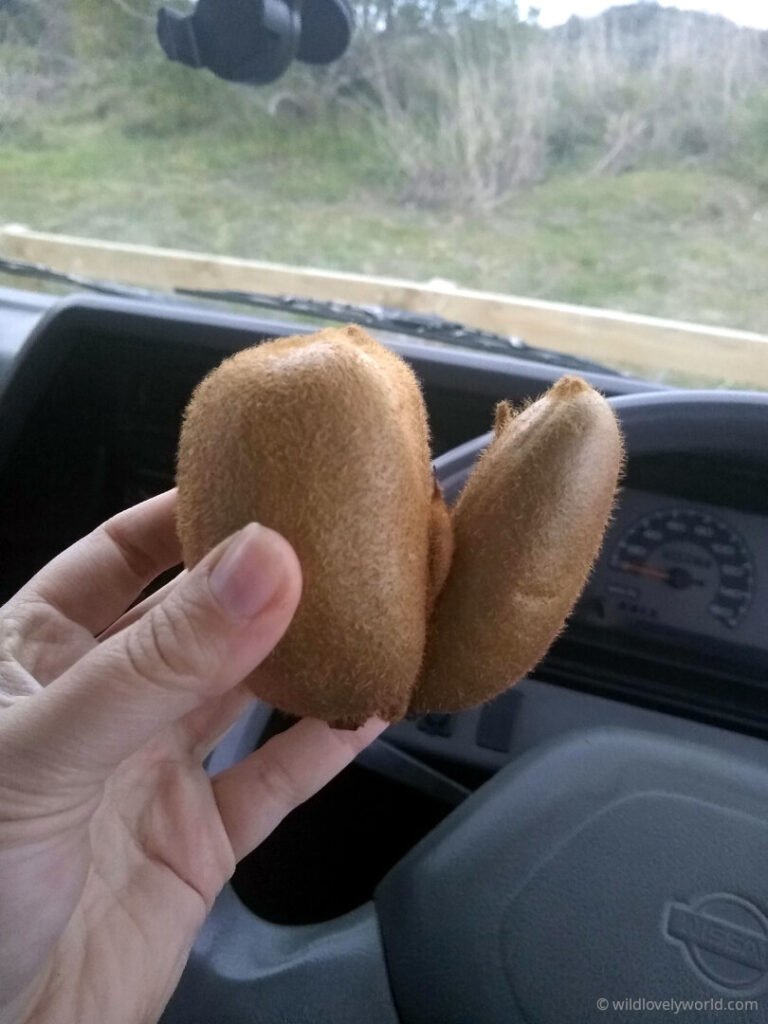
Class 2 is kiwifruit that is of a flatter and wider shape, which is considered to be an imperfection and is consumed domestically in New Zealand.
Within the packhouse, there is actually a lot of technology used to “grade” the kiwifruit. As the kiwifruit moves along the production line, it will be photographed thousands of times, and computers will determine which fruit is Class 1 and Class 2 and send the kiwifruit on its different journeys along the production line based on what the computer has determined.
However, the computers are not perfect, so the kiwifruit is also sent along conveyor belts for humans to look at.
The role of Graders is to manually inspect the kiwifruit and make sure that it meets certain criteria. Graders will remove defective, blemished or misshapen fruit before it gets packed.
For example, Graders on Class 1 will remove any fruit that is not Class 1. Additionally, they will remove fruit that has Sooty Mould on it or any big sun spots on the skin.
My Experience Working In Grading
Occasionally, I was positioned at a Grading station, mostly to cover for people’s breaks or their absences if they didn’t come in that day.
Grading for me was one of the most boring positions at the packhouse!
The job is to stare at kiwifruit moving along a conveyor belt and occasionally pick one out that has Sooty Mould or is misshapen or has some other imperfection.
Grading workers usually work alone by themselves at a set station along the production line, so there is no opportunity to chat.
The best thing about Grading is that often it is a seated position! Many of the roles in the packhouse require standing all day long, but Grading is one of the rare roles that can be done sitting down.
For that reason, it is mostly done by older, local women in the community who have been working at the packhouse seasonally for years. They have also honed their expertise in kiwifruit and can spot imperfections very quickly!
I didn’t mind working in Grading. I’d say it is better than Packing if I had to choose between the two.
Packhouse General Working Environment & Atmosphere
Overall, the general working environment and atmosphere in the packhouse was pleasant.
All of our colleagues were interesting and good fun to chat to. We were working with people from all over the world, so it was great to get to know lots of different people.
EastPack tried to make things fun for us with music during shift and then games and competitions with prizes at break times.
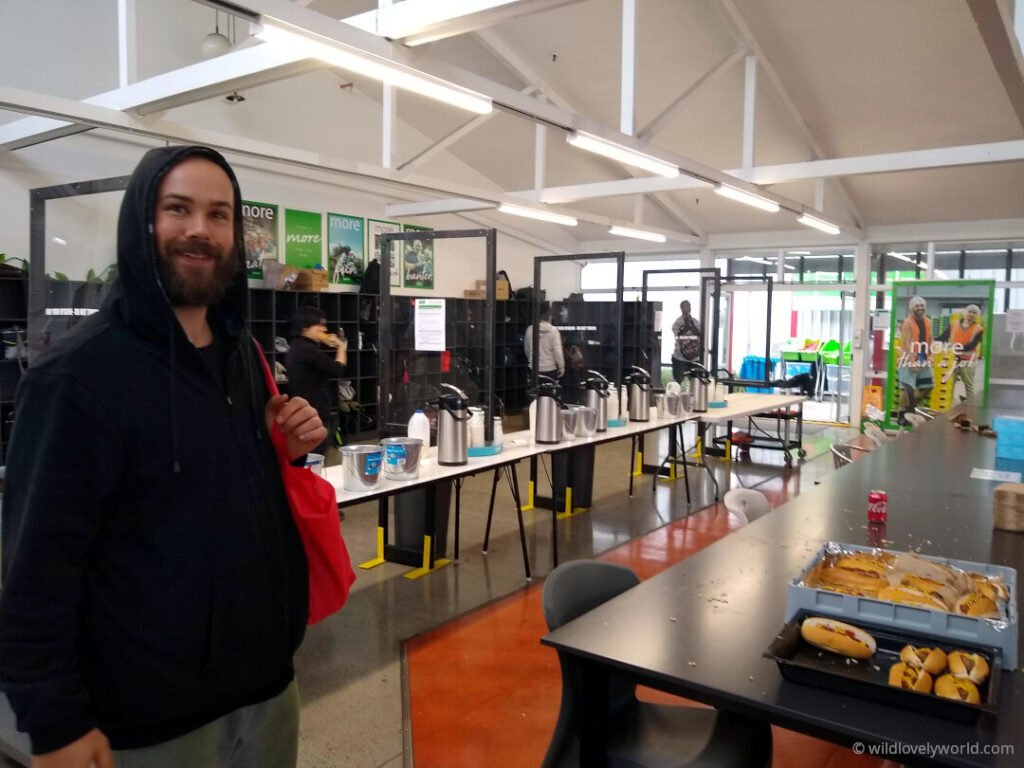
They provided a free, basic breakfast each morning of wheat biscuits, cereal and milk. We always had access to free tea and coffee on break. Quite often they would also provide a free lunch like pizza, a sausage sizzle or BBQ burgers.
Packhouse Processes & Procedures
Being a food production facility, there are certain hygiene procedures workers need to go through before starting their shift.
Clothing & Personal Items
You can wear whatever you like on your shift as long as it is comfortable and you have closed-toe shoes you can stand in all day. Loose clothing, jewellery, watches, etc. were not permitted in the packhouse because it is a food processing facility with machinery.
All personal items and bags had to be stored in the cubby shelves outside the packhouse (located in the indoor cafeteria area). They told us we were not allowed to take our phones into the packhouse but almost everyone took their phone with them in their pocket.
Annoyingly, we were not even allowed to take water bottles into the packhouse with us for our shift. That meant if we ever needed to have a drink, we had to get permission to leave our station and go to the water fountains to have a drink of water. Sometimes we had to walk far to get to the nearest water fountain, but that was okay because it gave us a chance to stretch our legs and have a mini “break”.
Before Entering The Work Area
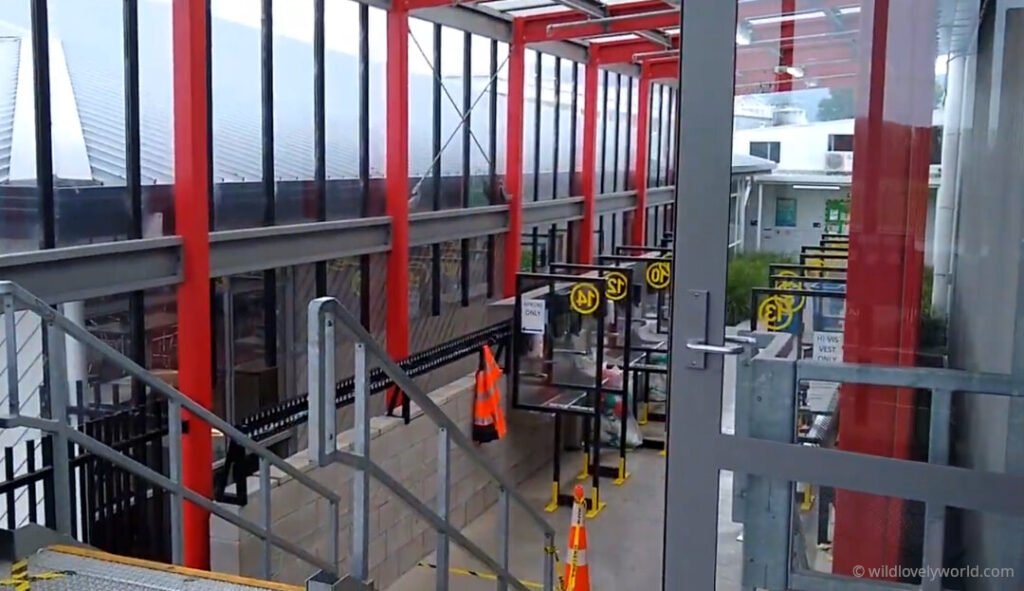
Before entering the packhouse line area, we had to wash our hands thoroughly. We also needed to put on hairnets and aprons.
The packhouse we were working at was quite large, and there were actually two production lines – red and blue (alpha and bravo).
Our hairnets were red, and for the other line, they had blue. Depending on the section, we also had to wear aprons or high-vis vests.
Everyone had to enter and exit the packhouse at the same time – rewashing hands and putting on a new hairnet each time.
Time Management
EastPack were strict with other policies, such as time management being very important.
Everyone had to be ready at their station for the start of shift time and after breaks. As soon as work time started, a horn would sound, and the production line machines would turn on. So everyone needed to be ready to go when the conveyors started moving!
When arriving at the packhouse for our shifts, we had to clock in at a machine using our fingerprints!
EastPack had a rule that clocking in needed to be done at least 15 minutes before the shift started. Once, I clocked in less than 15 minutes before the shift, and even though I was at my station and ready to start work, EastPack marked me as being “late”. They even docked the entire 15 minutes off my pay, even though I was working for at least 10 minutes of those 15 minutes! I was quite upset about this, as I believe in fair workers’ rights, but that was their policy, and what could I do? I made sure I was never late again!
Dealing With Boredom
Working in a food production factory is pretty mind-numbing work. I spent the majority of my working hours daydreaming, thinking of ideas, working through problems in my mind – that kind of thing.
If I were positioned with someone else, we could chat during the shift. But quite often this was frowned upon if you got too into a conversation, as the managers deemed it to be a distraction from the task at hand!
The whole packhouse was pretty noisy with the machinery. Thankfully, it wasn’t totally boring listening to machines all day. The packhouse had huge speakers, and they would play a seemingly never-ending playlist of music.
The DJs were the production line managers who decided what we would all have to listen to that day. Sometimes it was pop, other times folk, and occasionally, rock or heavy metal.
Quite often we had to listen to the same songs more frequently than others, and they became “the songs of the season”.
Headphones were not permitted, but some people managed to sneakily wear Bluetooth earbuds or hide wired headphones underneath their clothes. I was one such person and spent a lot of time listening to podcasts when I could get away with it!
Of course, one ear always had to be free in case a Team Leader came over so you could hear what they were saying!
FREE Kiwifruit To Take Home From The Packhouse
The aim for growers and packhouses is for the majority of the kiwifruit in the packhouse to be Class 1 fruit. That is because it is considered perfect kiwifruit and it is more valuable for the export market.
Any kiwifruit that doesn’t meet the standards for Class 1 is considered for Class 2 – the domestic market. There is a “mini packhouse” within the packhouse which processes and packs Class 2 fruit.
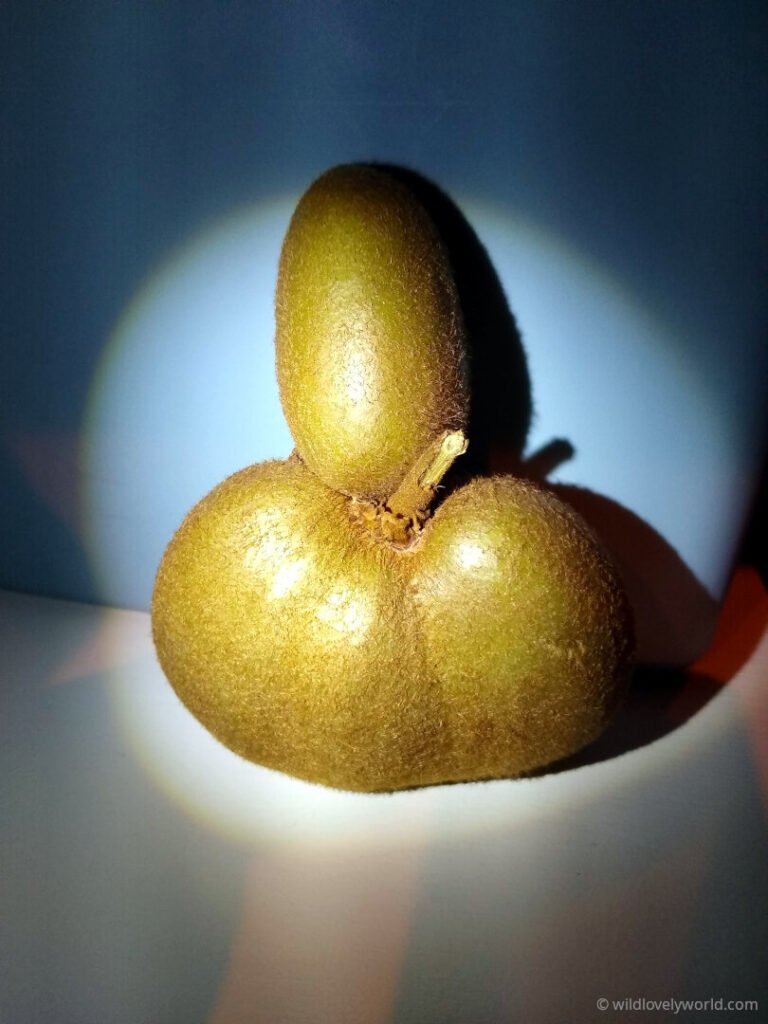
Kiwifruit that doesn’t meet either of these standards is essentially dumped into big bins as “food waste” – or FREE kiwifruit that packhouse workers can take home for themselves!
Everyday workers would raid the free food bins to take home free kiwifruit! After all, why buy kiwifruit when you’re working in the packhouse, and you can get it for free?
By the end of the season, we were absolutely sick of looking at and eating kiwifruit!
Where To Live During Kiwifruit Season
For accommodation during kiwifruit season, most workers tend to stay in local holiday parks, backpackers, hostels, or worker camps. Several people we worked with were staying in campsites or hostels.
If you have a campervan or campercar, you could live in your vehicle for the season. For van lifers, there are freedom camping sites near to kiwifruit packhouses (more on our experience freedom camping below), or you can book in a campsite or holiday park.
Here is a list of local accommodation options that may be able to assist you with worker accommodation during your stay in Bay of Plenty for kiwifruit season:
- Apple Tree Backpackers, Tauranga
- Hugo & Carters Backpackers & Motel, Tauranga
- Wanderlust NZ, Tauranga (⭐highly rated)
- Mount Backpackers, Mount Maunganui (⭐highly rated)
- Pacific Coast Lodge & Backpackers, Mount Maunganui (⭐highly rated)
- Seagulls Guesthouse, Mount Maunganui (we stayed here for a couple of nights once to have a break from our van)
- Kiwi Corral, Te Puke (seasonal workers hostel)
- Te Puke Holiday Park, Te Puke
- Katikati Backpackers, Katikati
- The Royal Opotiki Backpackers, Opotiki
Other Working Holiday Makers we worked with hired short-term lets in neighbouring towns. For example, near Te Puke, people lived in shared houses in Papamoa, Mount Maunganui and Tauranga. You could check on Vrbo for short-term rental accommodation.
We Lived In Our Campervan While Working At The Packhouse (Freedom Camping Options) 🚐
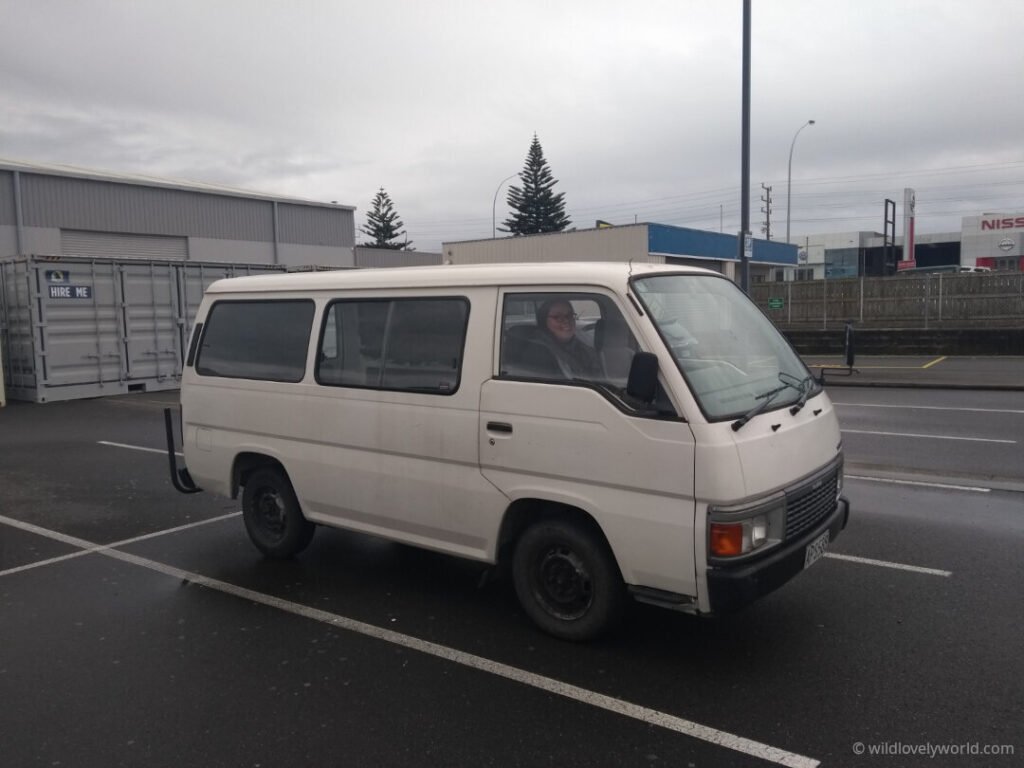
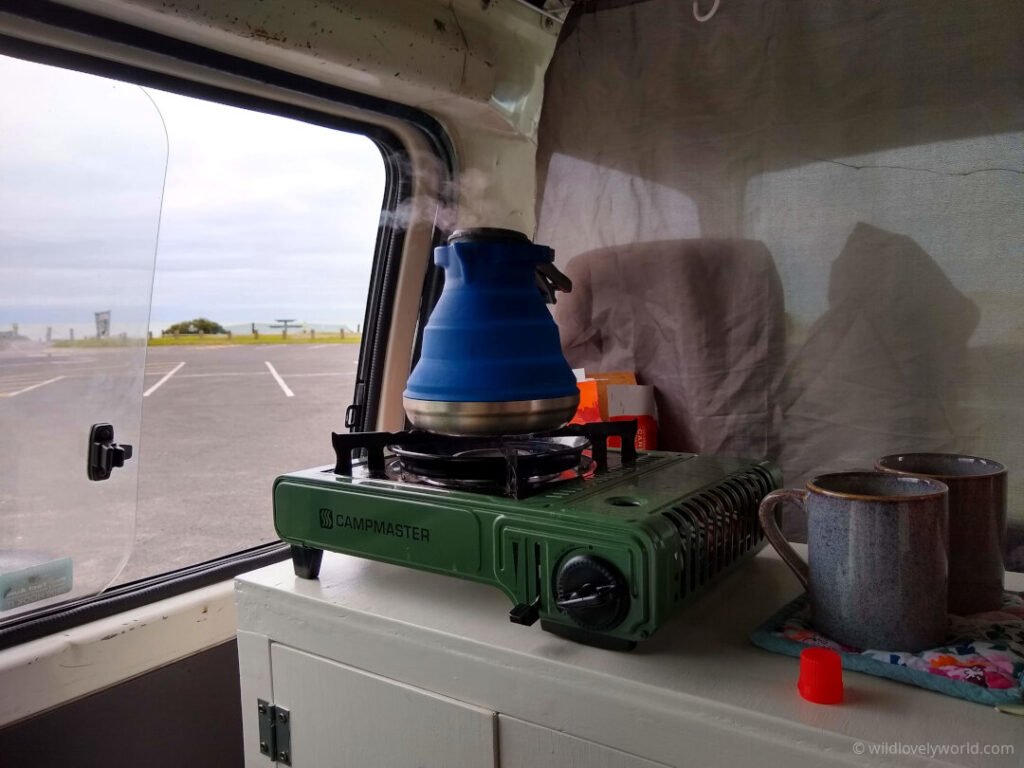
At the time, we had our self-contained campervan, which we were living in and travelling around New Zealand.
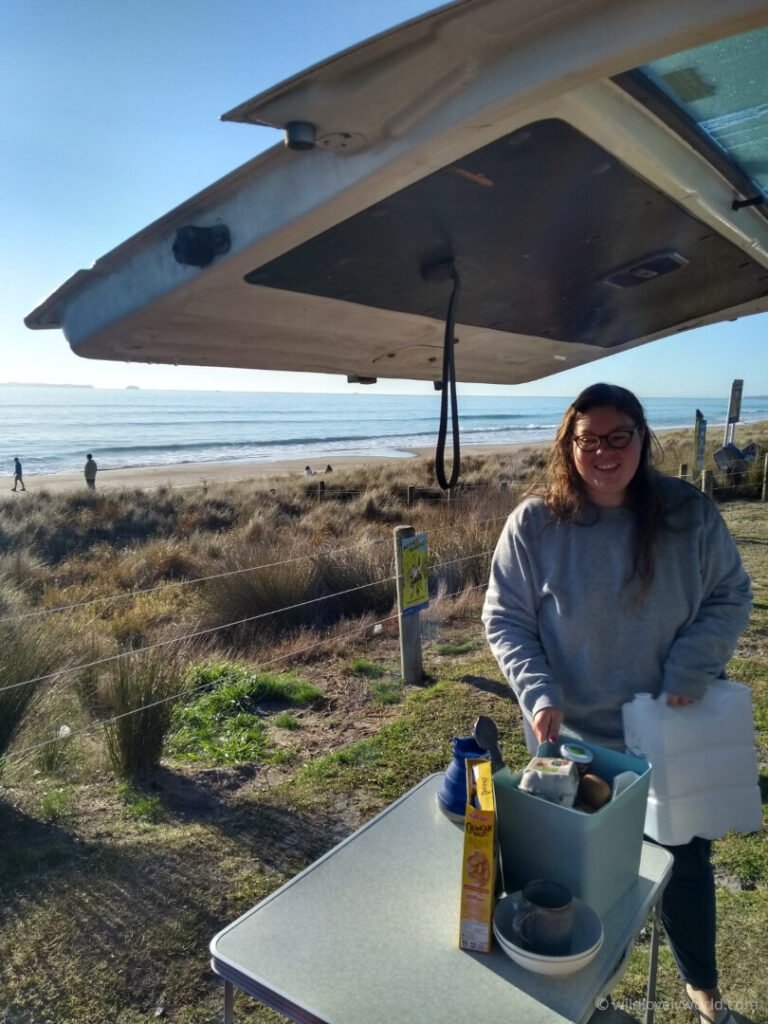
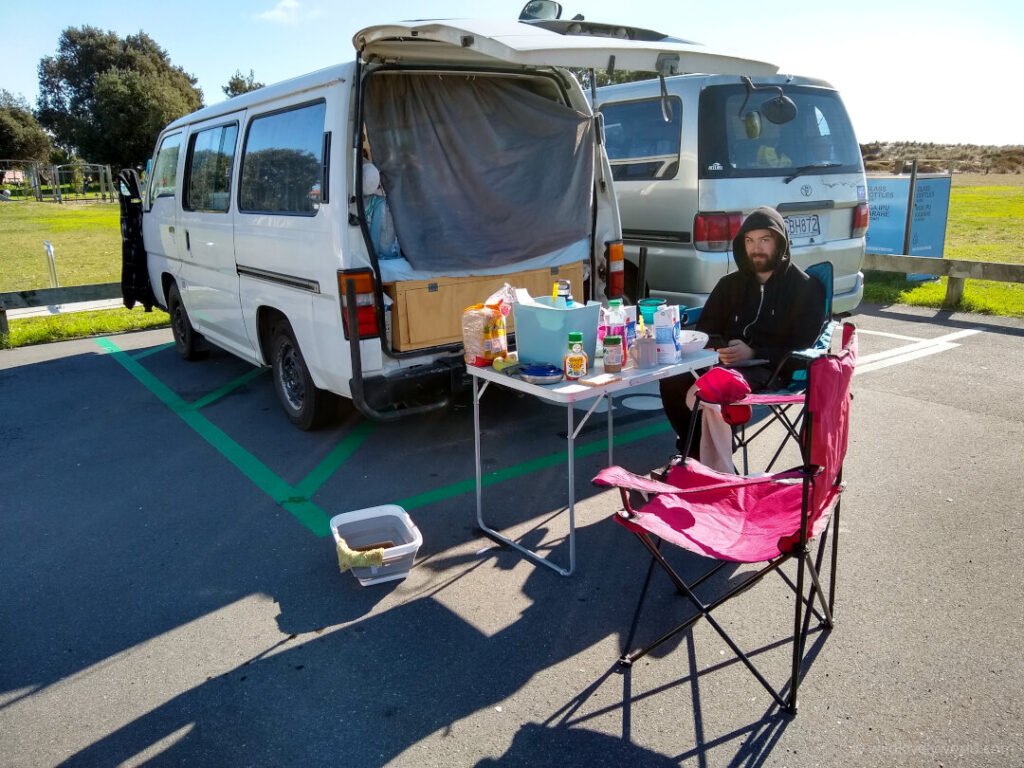
We lived in our campervan throughout the kiwifruit season. We parked in a freedom camping car park in Te Puke just down the road from the packhouse.
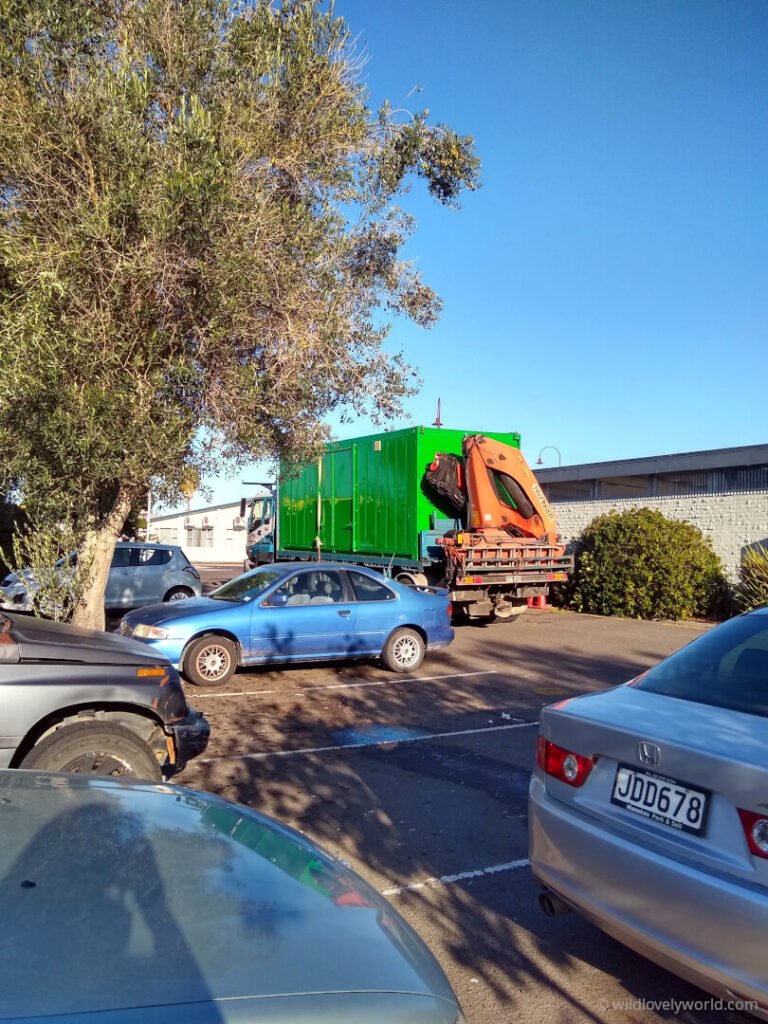
It was Covid lockdown times so it was a little unusual. There were a lot of campervans also living in the car park at the time, many people also working at packhouses or kiwifruit picking.
The local council even installed a temporary shower block at the freedom campsite in Te Puke so those living there could have a hot shower! Amazing! We enjoyed those showers for many weeks. Toward the end of kiwifruit season, the showers were removed by the council – I still remember the sadness of this day, watching the tow truck take them away! 😅
The car park also had public toilets, a supermarket nearby, and a laundrette!
It wasn’t bad living in our van in a car park for 3 months. When I look back on those times, I do think of as a kind of sad but funny story! 😂
Freedom Camping Sites In Bay Of Plenty
Occasionally, if we wanted a change of scenery from the Te Puke freedom camp or we had a day off from the packhouse, we would drive to another nearby freedom camp and spend a night or two there.
Our favourite freedom camping spots in the Bay of Plenty near Te Puke were Dotterel Point Reserve, Motiti Reserve, and Otamarakau Beach. Further afield in Katikati, we liked to stay at the Uretara Domain freedom camp.
Local Amenities, Getting Around & Things To Do In Te Puke
For grocery shopping and amenities, Te Puke is a small town, but it has everything you need. New World is the largest grocery store in Te Puke. There are also cafes, restaurants and bars. Liquid Laundry is the laundromat we used in Te Puke (they also have locations across New Zealand – we used them regularly!). Te Puke Library has free public WiFi.
If you need additional supplies like clothes or homewares, Papamoa and Tauranga have large shopping centres with stores like Kmart and The Warehouse.
Te Puke is a small town, so there aren’t so many things to do. It is home to a large kiwifruit which makes a great photo op!
A short drive from Te Puke are lots of nice trips to make for sightseeing. Raparapohoe Falls near Te Puke is a small waterfall that is a popular swimming spot and a 1-hr walk.
Papamoa Beach is my favourite beach in the Bay of Plenty for relaxing, swimming and walking; it is also a short drive away from Te Puke.
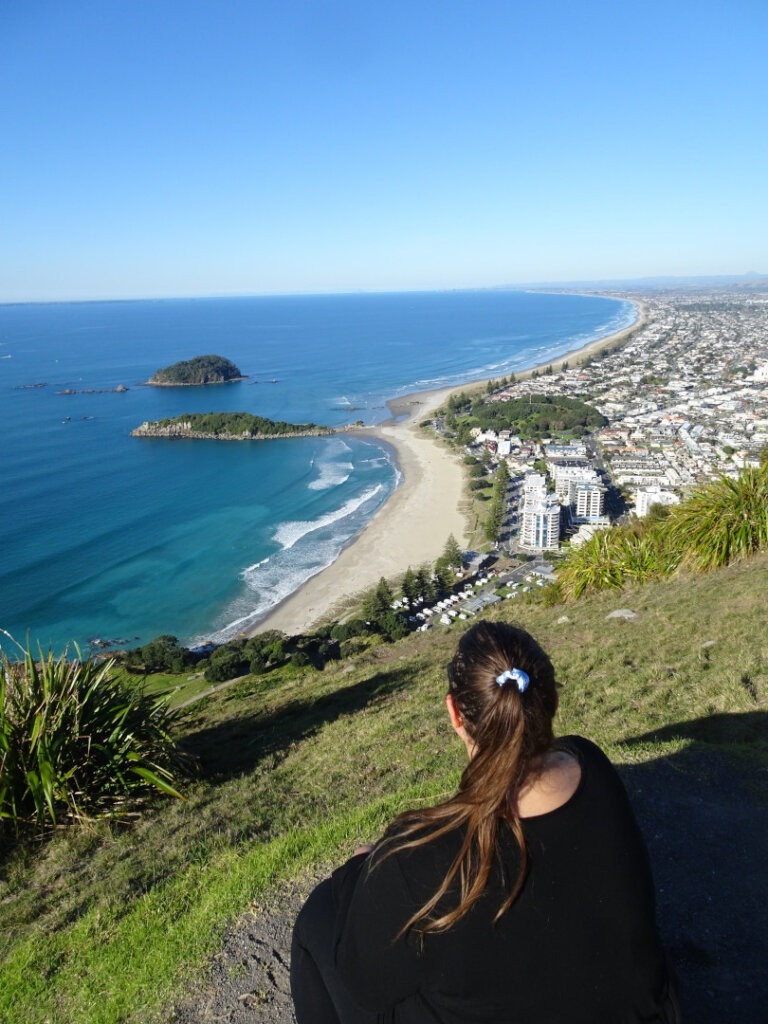
Mount Maunganui and Tauranga are large towns/cities and have plenty of things to do. Hiking Mount Maunganui and relaxing at the Mount Maunganui hot pools was one of my favourite activities. Rotorua also has wonderful hot pools, like the Polynesian Spa, as well as interesting geothermal activity to look at.
- Related Read: 18 Best Hot Pools & Springs In North Island, New Zealand
If you want to see glowworms, McLaren Falls near Tauranga is a great place to see glowworms for free!
Your Own Transport Is Essential
You will need your own vehicle to get around the area, as public transport is not an option unfortunately. However, if you get accommodation and a job at a packhouse located in Te Puke town, you could easily walk everywhere as the town is very small. Quite often we would walk to the packhouse from our campervan site at the freedom camp.
Kiwifruit Packhouse Jobs NZ: Complete Guide & My Honest Experience – Thanks For Reading!
Working in a kiwifruit packhouse was never a job I aspired to do. But when you’re in New Zealand, well, don’t do as New Zealanders do, because they would never work in a packhouse! 😂
Kiwifruit work in New Zealand is the epitome of what a Working Holiday is all about, so when the opportunity arose (and my bank balance called for it), I decided to give it a go. I had no idea what to expect and no prior experience, but even though I was thrown in at the deep end, I managed to keep my head above water and keep kicking.
By the end of it, I had earned a nice chunk of money to continue travelling in New Zealand, made lots of new friends, learned things I never dreamed I would know about kiwifruit, and had added another funny and interesting story to our great tapestry of life experience.
If you’re considering working in a kiwifruit packhouse, I hope this guide helps you! Happy packing 🥝 – Lauren x
Where to next? Want to get the best bang for your buck? Check out the 12 Best Paid Backpacker Jobs In New Zealand

Did you find this article useful? Let me know in the comments or join me everywhere @wildlovelyworld
If you enjoyed this post, share it with a friend! 💌
Say thanks and send me a virtual coffee on Ko-Fi!☕
Adventure in your inbox! – Join my mailing list (newsletter launching soon!) 🌏:

Related Articles